Metafoodx CEO Fengmin Gong Talks Food Waste Prevention on the Climate Hive Podcast
Updated: 23 hours ago
Metafoodx CEO Fengmin Gong recently joined Kevin Drolet and Mike Higgins on the Climate Hive podcast, What Do You Solve?, to discuss a major blind spot in commercial kitchens: knowing how much food is actually being produced, consumed, and left over.
While operators have purchasing and sales data, that information doesn't always show chefs what is happening during service. Without a clear picture of production and consumption, teams are often left relying on forecasts and experience to decide how much food to prepare.
Using AI to prevent food waste before it happens
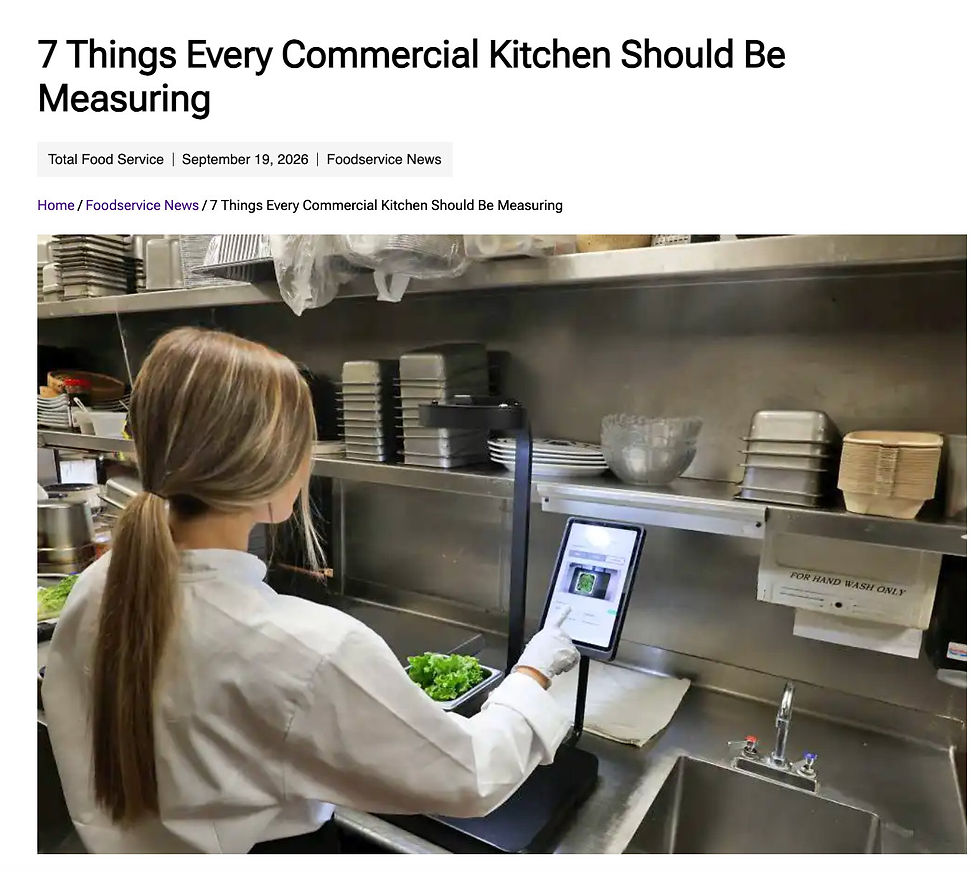
During the conversation, Gong explained why preventing food waste starts well before food reaches the trash. Metafoodx uses AI, computer vision, and sensors to track food as it moves through the kitchen, giving teams real-time data on what they make and what guests actually consume. That helps chefs catch overproduction earlier, adjust batch sizes, and make better production decisions throughout service. The goal isn't to give kitchen teams more data to enter. It's to take manual work off their plate. The Metafoodx AI Scanner automatically captures information such as food quantity, portion area, and temperature, allowing staff to stay focused on food quality and service while the technology handles more of the counting and tracking. This same idea, using AI to reduce manual work rather than add to it, is a theme Metafoodx has explored in how AI improves inventory management in commercial kitchens.
A better way to forecast food production
The episode also explored how real-time kitchen data can improve forecasting. Demand changes throughout the day. A batch size that works during a lunch rush may be too much an hour later. Seeing production and consumption as they happen gives chefs a better way to decide what to make next, how much to make, and when to make it.
For Gong, this is part of a larger shift in AI: moving beyond digital information and helping operators understand what is happening in physical environments like the commercial kitchen. Metafoodx has written more about this shift toward real-time forecasting in AI food demand forecasting: how commercial kitchens reduce overproduction.
Listen to the full episode
Watch or listen to the full Climate Hive episode, What Do You Solve?, to hear Fengmin Gong discuss food waste prevention, food operations intelligence, and the future of AI in foodservice. This conversation follows Metafoodx's recent feature on TechBullion, where the company's 3D AI scanner technology was highlighted for bringing real-time operational intelligence to high-volume kitchens.
Metafoodx is a food operations intelligence platform that captures the food journey from prep to plate, so foodservice teams can lower food cost, produce more accurately, and prevent waste before it happens. Ready to see how we can help transform your food service operation? Book a demo with our team today.