How Can AI Improve Inventory Management in Commercial Kitchens?
Updated: 3 days ago
From real-time inventory tracking to predictive purchasing, AI is reshaping how commercial kitchens manage ingredients. See how data-driven inventory decisions lead to lower costs, less waste, and smoother kitchen operations.

Key Takeaways
|
Running out of ingredients during a busy lunch service or throwing away food that was overordered are two of the biggest challenges commercial kitchens face. In many operations, these problems aren't caused by poor planning - they're caused by limited visibility into inventory and changing customer demand.
According to the U.S. Department of Agriculture (USDA), food loss and waste cost the United States an estimated $382 billion annually, highlighting the financial impact of inefficient inventory and food management across the supply chain. Government data also emphasizes that reducing food waste improves operational efficiency while supporting sustainability goals.
For commercial kitchens, manual inventory counts, spreadsheet tracking, and fixed ordering schedules often can't keep pace with fluctuating demand. That's where AI inventory management makes a measurable difference.
Whether it's preventing ingredient shortages before dinner service or reducing over-ordering before a slow weekend, AI helps kitchens make faster, data-backed inventory decisions that improve both profitability and operational efficiency.
Tracks Inventory in Real Time Instead of Manual Stock Counts
One of the biggest challenges in commercial kitchen inventory management is that inventory records often become outdated the moment ingredients leave storage.
AI solves this by continuously updating inventory as ingredients are received, prepared, served, or discarded.
Using technologies like smart cameras, connected scales, and digital inventory systems, every inventory movement is automatically recorded without requiring staff to stop and perform manual counts.
Instead of waiting until the end of a shift to discover missing inventory, managers can monitor stock levels as service is happening.
AI helps kitchens:
Eliminate time-consuming manual inventory counts
Reduce inventory discrepancies caused by human error
View current stock levels throughout the day
Identify inventory shortages before they interrupt service
Business Impact: Real-time inventory visibility allows purchasing teams to make faster decisions while reducing labor spent on inventory management. |
Predicts Ingredient Demand Before Kitchens Place Orders
Inventory problems usually begin before ingredients are even purchased.
Many commercial kitchens still estimate inventory based on previous weeks or staff experience. However, customer demand changes constantly due to weather, reservations, holidays, local events, and seasonal menu trends.
AI replaces these assumptions with predictive demand forecasting.
Instead of relying on one data source, AI combines information from across the operation to estimate how much inventory will actually be needed.
It analyzes:
Historical POS sales
Guest counts
Reservation data
Past consumption trends
Weather forecasts
Holidays and special events
Seasonal menu demand
This allows kitchens to purchase ingredients based on expected consumption rather than guesswork.
Business Impact: Better forecasting reduces overstocking, minimizes emergency purchasing, and helps kitchens maintain optimal inventory levels. |
Automates Reordering Before Stock Runs Low
Many kitchens discover inventory shortages only when staff begin preparing meals.
By then, purchasing options are limited, often leading to emergency supplier orders or unavailable menu items.
AI continuously monitors inventory against expected consumption.
When ingredient levels approach a predefined safety threshold, the system automatically recommends, or triggers, a purchase order based on projected demand.
Rather than ordering too early or too late, kitchens maintain healthier inventory levels throughout the week.
AI-powered reordering helps operators:
Prevent stock shortages
Reduce emergency purchasing
Maintain consistent inventory levels
Save administrative time
Improve purchasing accuracy
Business Impact: Automated purchasing ensures essential ingredients are available without increasing excess inventory. |
Reduces Food Waste Through Smarter Inventory Decisions
Food waste is often an inventory problem before it becomes a disposal problem.
When kitchens purchase more ingredients than they can realistically use, spoilage becomes unavoidable.
AI identifies these patterns early by tracking both inventory movement and discarded food.
For example, if fresh produce repeatedly expires before being used, AI highlights the trend and recommends adjusting future purchasing quantities.
Many systems also support First In, First Out (FIFO) inventory practices by identifying which ingredients should be used first.
This helps operators reduce spoilage while improving inventory turnover.
AI reduces waste by:
Monitoring expiration dates
Prioritizing FIFO inventory rotation
Tracking ingredient waste
Identifying over-purchased products
Improving future purchasing decisions
Business Impact: Less spoilage means lower food costs, better inventory utilization, and improved sustainability. |
Connects Inventory With the Rest of Kitchen Operations
Inventory doesn't exist in isolation.
Every purchasing decision affects production planning, while every meal served changes inventory levels and influences tomorrow's forecast.
This is where food operations intelligence creates the biggest operational advantage.
Instead of treating inventory as a separate task, it connects inventory data with forecasting, production planning, purchasing, and food waste tracking so every decision is based on the latest operational information.
Operational Workflow
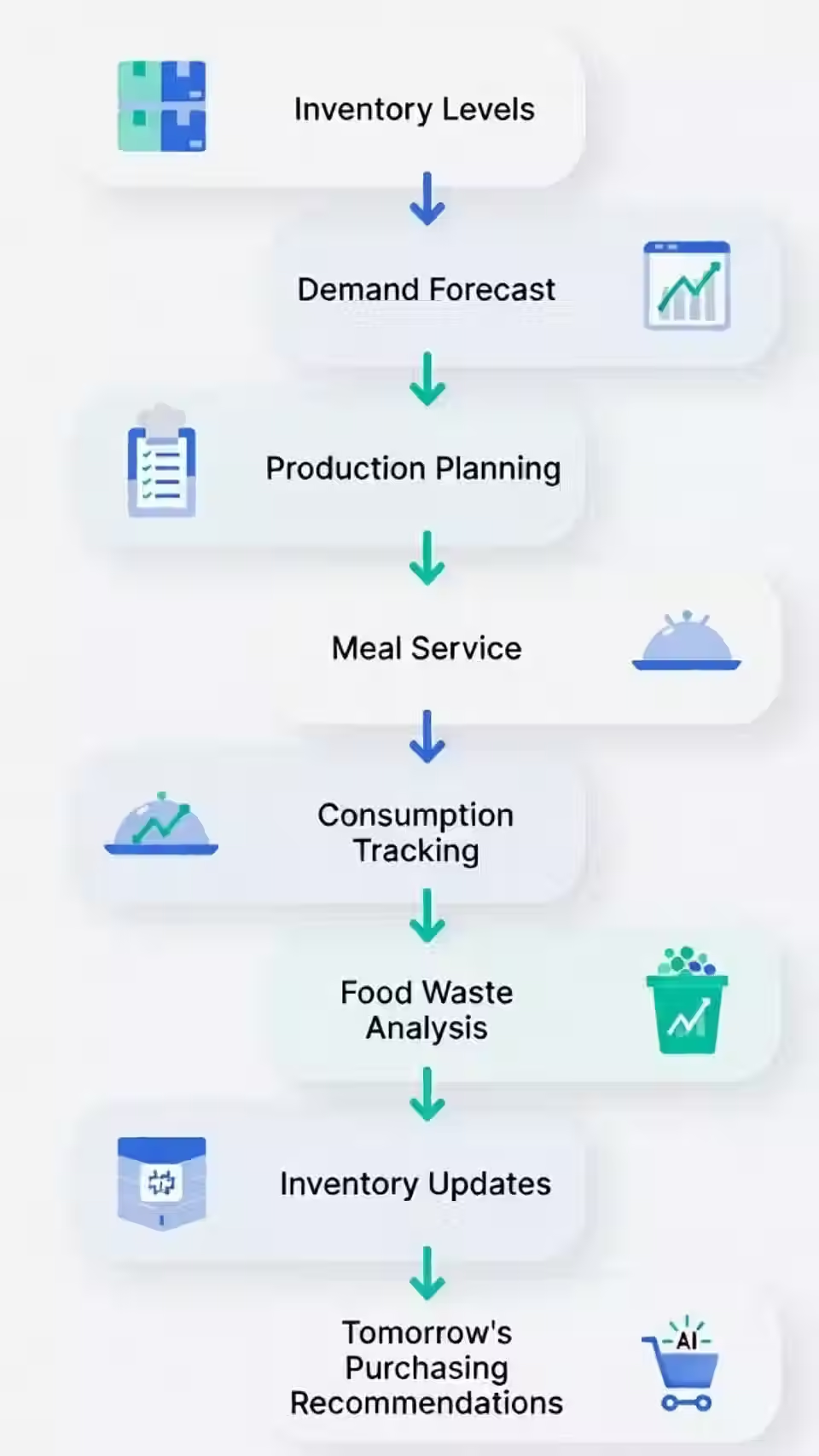
Rather than reacting to inventory problems after they happen, operators can continuously optimize purchasing decisions based on what is happening across the entire kitchen.
Business Impact: Connected food operations intelligence improves inventory accuracy, reduces food waste, supports better production planning, and creates a more efficient commercial kitchen. |
Traditional vs. AI-Powered Inventory Management
Traditional Inventory Management | AI Inventory Management |
Manual stock counts | Continuous real-time tracking |
Fixed ordering schedules | Predictive purchasing recommendations |
Reactive restocking | Automated reorder alerts |
Spreadsheet-based records | Live inventory visibility |
Waste identified after spoilage | Early expiration and waste alerts |
Purchasing based on estimates | Data-driven purchasing decisions |
As kitchens become more data-driven, AI enables operators to shift from reactive inventory management to proactive decision-making.
Key Operational Benefits of AI Inventory Management
Beyond automation, AI creates measurable operational improvements that directly impact profitability and efficiency.
Better inventory accuracy
Real-time tracking minimizes discrepancies between recorded inventory and actual stock levels.
Lower food costs
Purchasing decisions become more accurate, reducing unnecessary spending on excess inventory.
Reduced food waste
Better forecasting and expiration monitoring help prevent spoilage before it happens.
Faster inventory audits
Automated tracking significantly reduces the time staff spend conducting manual inventory counts.
Fewer stockouts
Predictive purchasing helps ensure essential ingredients remain available during peak service.
Smarter purchasing decisions
AI continuously adjusts recommendations based on changing demand rather than relying on historical averages alone.
Improved operational efficiency
Kitchen managers spend less time managing inventory and more time improving overall kitchen performance.
Improve Commercial Kitchen Inventory with Smarter AI-Driven Decisions
Effective inventory management isn't about ordering more or counting faster—it's about making better decisions with better data.
When inventory is connected to forecasting, production planning, purchasing, and food waste tracking, commercial kitchens gain the visibility needed to reduce unnecessary costs while improving operational efficiency.
That's the approach behind Metafoodx. Instead of simply digitizing inventory, its food operations intelligence platform helps foodservice operators transform operational data into smarter daily decisions-from purchasing and production planning to waste reduction and long-term inventory optimization.
If your organization is looking to improve inventory accuracy, reduce food waste, and build a more data-driven commercial kitchen, explore how Metafoodx's food operations intelligence platform can support those goals.
Frequently Asked Questions
How can AI improve inventory management?
AI improves inventory management by tracking stock in real time, forecasting demand, automating reordering, and reducing waste through data-driven purchasing decisions.
How does AI reduce food waste in commercial kitchens?
AI monitors inventory movement, tracks expiration dates, identifies waste patterns, and recommends better purchasing and production plans to minimize spoilage.
Can AI predict inventory needs in restaurants?
Yes. AI analyzes POS data, historical sales, reservations, weather, holidays, and local events to estimate future ingredient demand more accurately than manual forecasting
What are the benefits of AI inventory management software?
AI inventory management software improves inventory accuracy, reduces manual work, lowers food costs, minimizes stock shortages, and supports more efficient purchasing decisions.
Is AI inventory management suitable for large commercial kitchens?
Yes. AI is particularly valuable for universities, hospitals, hotels, corporate dining facilities, and multi-location foodservice operations where inventory complexity is higher.
How does AI improve inventory accuracy?
AI continuously updates inventory records using real-time operational data, helping eliminate manual counting errors and providing better visibility into current stock levels.
Related reading: AI Kitchen Inventory Management: How It Works in Commercial Kitchens · How to Reduce Food Costs Without Cutting Quality
Metafoodx is a food operations intelligence platform that captures the food journey from prep to plate, so foodservice teams can lower food cost, produce more accurately, and prevent waste before it happens. Ready to see how we can help transform your food service operation? Book a demo with our team today.