
Why Cruise Food Forecasting Is Different Than Hotels or Restaurants
- Metafoodx

- 4 hours ago
- 3 min read

Cruise ships face one of the most complex food forecasting challenges in the hospitality industry. Unlike hotels and restaurants, cruise kitchens can't quickly replenish inventory or adjust purchasing when demand shifts. Once a ship leaves port, every meal has to come from food that's already onboard.
For executive chefs and food and beverage directors, accurate forecasting affects far more than food cost. It shapes storage capacity, labor planning, guest satisfaction, sustainability goals, and how much food ultimately ends up as waste — a challenge Metafoodx's guide to cruise food waste reduction covers in more depth.
According to the World Wildlife Fund (WWF), the average cruise passenger generates about 3.5 kg (7.7 pounds) of solid waste per day, making waste reduction a significant operational priority across the industry. Food is one of the largest components of that waste stream, particularly on ships serving thousands of meals every day.
Every Sailing Has Different Demand
Hotels and restaurants typically forecast demand using reservations, historical sales, local events, and seasonality. Cruise ships have to account for additional variables that shift dining patterns throughout a single voyage.
Sea days typically generate more buffet traffic than port days, since more passengers stay onboard. Weather can drive up demand for indoor dining venues and room service, while delayed shore excursions can shift meal times across multiple restaurants at once.
Passenger demographics matter too. Family cruises, luxury sailings, expedition cruises, and themed voyages all have different dining preferences, which means historical averages only tell part of the story.
Inventory Cannot Be Replenished Mid-Voyage
Restaurants and hotels can often receive deliveries several times a week. Cruise ships have to load enough food before departure to support the entire itinerary. Storage space is limited, and refrigerators, freezers, and dry storage all have to be carefully managed throughout the voyage. Every pound of food that's prepared but not consumed represents unnecessary purchasing, labor, storage space, and waste-handling cost. Because replenishment opportunities are limited until the next port, production planning matters even more than it does on land — which is exactly why fixed provisioning windows are one of the core constraints Metafoodx's cruise kitchen intelligence is built to work around.
Buffet Operations Add Another Layer of Complexity
Buffets remain one of the most popular dining formats on cruise ships, but they also create their own forecasting challenges. Guests expect buffet stations to stay fully stocked throughout service, even during slower periods. To maintain presentation standards, kitchens often prepare more food than they actually expect to serve.
Without menu-level consumption data, chefs may not know which dishes consistently need replenishment and which routinely come back with leftovers. Metafoodx's post on reducing overproduction in commercial kitchens covers strategies that apply directly to buffet batch sizing — tracking actual consumption lets kitchens adjust production schedules while still maintaining the guest experience.
Menu-Level Data Improves Forecasting
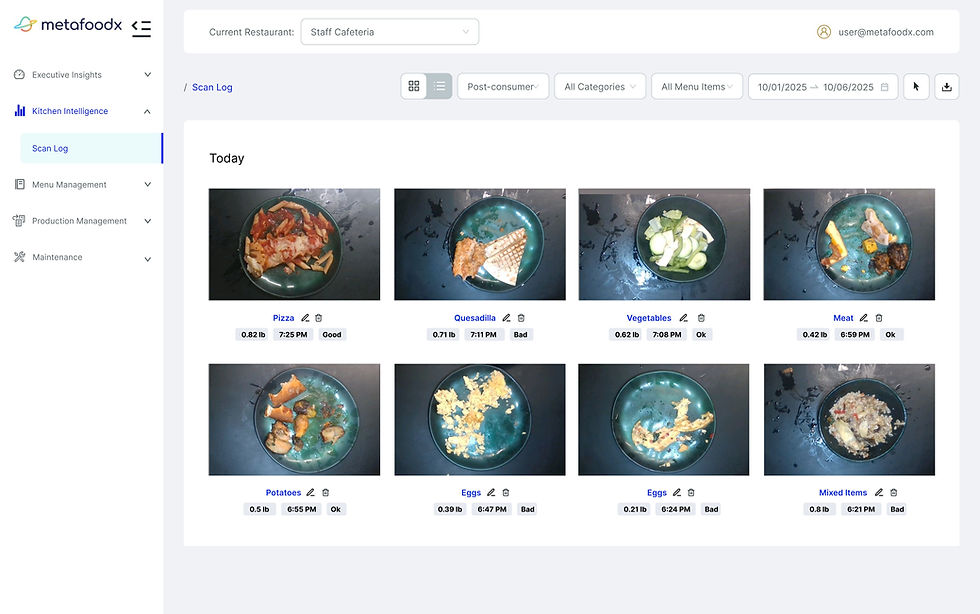
Passenger counts are a starting point for forecasting, but they don't explain what guests actually eat.
Tracking production against actual consumption gives chefs a much clearer read on demand for every menu item. Over time, this data helps answer the questions that actually drive planning:
Which dishes are consistently overproduced?
Which menu items regularly sell out?
How does demand change between sea days and port days?
Which buffet items should be produced in smaller batches?
How do different itineraries affect consumption?
These are the same core metrics covered in Metafoodx's guide to kitchen metrics every executive chef should track — the difference at sea is that the stakes for getting them wrong are higher, since there's no next-day delivery to fix a bad call.
Better Forecasting Improves More Than Food Waste
Accurate forecasting helps reduce overproduction, but the benefits extend across the whole operation. When production more closely matches demand, cruise operators can lower food purchasing costs, improve storage utilization, reduce unnecessary labor, support sustainability initiatives, and maintain a consistent guest experience across the voyage. Better forecasting also makes inventory easier to manage on long itineraries, where every purchasing decision matters more than it would on land.

How Metafoodx Helps Cruise Kitchens Forecast More Accurately

Metafoodx provides AI-powered kitchen intelligence that tracks food production, consumption, overproduction, leftovers, surplus food destinations, and temperature logs at the menu-item level — purpose-built for the constraints of cruise galleys, as detailed in how cruises can reduce food waste and improve meal efficiency.
Staff scan food before it goes to the serving line and scan leftover food only when it returns from service.

Instead of relying on estimates, cruise operators get objective production-versus-consumption data for every menu item, across every dining venue and meal period. That information helps executive chefs improve forecasting, optimize buffet production, reduce food waste, and make better inventory decisions throughout each voyage — with zero-touch tracking that doesn't add extra work for galley crews already running at full speed.
Explore more on the Metafoodx blog, or book a demo to see how menu-level kitchen intelligence works on cruise ships specifically.


Comments