
How to Reduce Food Waste in Restaurants: 8 Practical Ways to Cut Costs
Updated: 4 days ago
Most restaurants treat some food waste as the cost of doing business. Prepping a little extra beats running out of a best seller on a Friday night, and ordering a bit more feels safer than an 86'd item. The trouble is that those small buffers add up.
According to ReFED, 29% of the U.S. food supply goes unsold or uneaten, worth about $381 billion a year. In foodservice specifically, ReFED estimates that 70% of waste is plate waste from guests who don't finish what they're served. The rest comes from the kitchen: overproduction, trim, spoilage, and prep mistakes.
The good news is that most restaurant food waste is preventable. Here are eight ways to reduce it.
1. Measure before you change anything
You can't reduce what you don't measure. Before adjusting recipes or orders, spend two weeks recording what gets thrown away, how much, and why. Sort waste into a few simple categories:
Spoilage: ingredients that expired before use
Prep waste: trim, peels, and mistakes
Overproduction: food prepared but never served
Plate waste: food guests left behind
Even a rough baseline shows where to focus. Our guide to conducting a food waste audit walks through the process, and how to track food waste in restaurants covers the tools.
2. Prep to demand, not habit
Overproduction is usually the largest kitchen-side source of waste. Prep lists often reflect what the kitchen has always made, not what guests have been ordering lately.
Compare recent sales and consumption by menu item and day of the week with what's on the prep sheet. If you consistently prep 40 portions of a side and sell 28, lower the par. For items with unpredictable demand, prep a base amount and finish in smaller batches during service. For a deeper look, see how to reduce overproduction in commercial kitchens.
3. Right-size portions
With plate waste making up most foodservice waste, portions are one of the biggest levers. If the same dish keeps coming back half-eaten, the portion is probably too large.
Standardize portions with scales, scoops, and plating guides so every cook serves the same amount. Look at which sides are routinely left on the plate and consider smaller default portions or making them optional. Guests rarely complain about a well-sized plate, and food cost drops immediately. For common pitfalls, see what causes restaurants to misjudge portion sizes.
4. Order from usage data
Many kitchens order on routine: the same case counts every week regardless of what moved. That leads to ingredients sitting in the walk-in until they spoil.
Base orders on actual usage from the past few weeks, and review them when the menu changes. If a premium ingredient keeps getting tossed, buy smaller quantities more often or rework the dishes that use it. Tight ordering also frees up cash and storage space.
5. Store and rotate properly
Spoilage often comes down to storage. Label and date everything, follow first in, first out, and keep coolers at the right temperatures. Put items that need to be used soon at eye level and at the front.
Temperature monitoring helps here too. Food held at the wrong temperature has to be thrown out, so catching temperature issues early protects both food safety and food cost. Eaping, a fast-casual restaurant, used Metafoodx's temperature monitoring to reduce temperature alerts by 30% during peak service.
6. Cross-utilize ingredients
The more dishes an ingredient appears in, the less likely it is to go to waste. When building or updating the menu, look for ways to use the same proteins, vegetables, and sauces in several items.
Put trim to work as well. Vegetable scraps become stock, bread becomes croutons or breadcrumbs, and yesterday's roasted vegetables can anchor a daily special. Just follow your food safety rules for holding and reuse.
7. Engineer the menu with waste in mind
Some dishes cost more than they earn once waste is included. An item might look profitable on paper but require expensive ingredients that often spoil, or produce heavy prep waste.
Review menu items by sales, margin, and waste together. Consider removing or reworking dishes that sell slowly and waste a lot, and promote dishes that use ingredients efficiently. Menu decisions are much easier when they're based on item-level data instead of gut feel.
8. Donate what you can't use
Some surplus is unavoidable. Partner with a local food bank or food recovery organization to take safe, unserved food. The federal Bill Emerson Good Samaritan Food Donation Act protects businesses that donate in good faith, and some states offer tax incentives. Compost what can't be donated.
Tools that make waste reduction stick
Manual logs work for a short audit, but they tend to fall apart during busy shifts. Staff skip entries, estimate weights, or describe the same item differently, and the data becomes hard to act on.
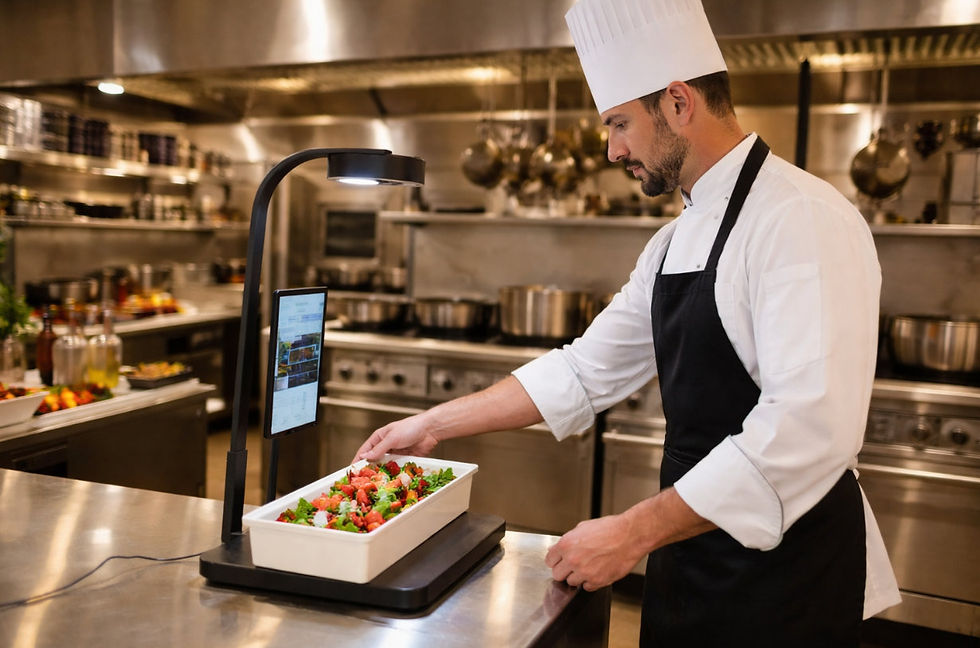
Automated tracking removes that burden. Metafoodx's AI Scanner identifies the menu item, weighs it, and records temperature in a quick scan, then tracks whether leftovers were reused, donated, or discarded. Managers can see which items are overproduced or wasted most often and adjust prep, portions, and orders based on that data instead of guesswork. For a side-by-side comparison, see manual food waste logs vs AI tracking software.
How to Evaluate Food Waste Software Savings
Start with the costs your operation can actually change. Track ingredient waste by item and meal period, then compare similar menu cycles and covers served before and after an operational adjustment. A reduction in recorded waste value is useful evidence, but confirm its effect on purchasing before treating it as cash savings.
Include hardware, software, onboarding, and ongoing fees in the calculation. Count labor savings only when time is actually redeployed or paid hours change, and avoid counting the same ingredient savings under both waste reduction and purchasing.
As a hypothetical example, verified annual purchasing savings of $12,000 and annualized system costs of $6,000 would produce $6,000 in net savings and a 100% simple ROI: ($12,000 − $6,000) ÷ $6,000 × 100. This is an illustration, not a Metafoodx price or customer result. Use the same time period for costs and benefits and state what is included.
Use our kitchen intelligence system buyer guide to compare what each vendor includes and ask for evidence from operations similar to yours.
To understand the data-capture approach behind AI tools, read how computer vision is used in restaurant operations.
Frequently asked questions
What is the biggest cause of food waste in restaurants?
In foodservice overall, plate waste is the largest share: ReFED estimates 70% of foodservice waste comes from food guests don't finish. In the kitchen, overproduction and spoilage are the biggest sources.
How can restaurants reduce food waste quickly?
Start by measuring waste for two weeks, then focus on the top few items. Adjusting prep pars and portion sizes for those items usually produces the fastest savings.
How can restaurants reduce plate waste?
Right-size portions, make sides optional or smaller by default, and watch which dishes regularly come back unfinished. Those items often need a portion or recipe change.
Is it legal for restaurants to donate leftover food?
Yes. The Bill Emerson Good Samaritan Food Donation Act protects businesses that donate food in good faith to nonprofit organizations. Check local health rules for handling and transport.
How does technology help reduce restaurant food waste?
Food waste tracking tools replace manual logs with consistent, item-level data. That makes it easier to see which menu items are overproduced or wasted and adjust prep, portions, and purchasing accordingly.
What is the best AI-powered food waste tracking solution for commercial kitchens?
Look for one that tracks food at every step, not just the trash bin: what's cooked, what's served, and what's thrown out. It should recognize menu items automatically, record weight and temperature on every scan, build forecasts from your own data, and report by menu item. Metafoodx does all of this with a two-second scan. Use our buyer's checklist to compare options.
Related reading: How to Reduce Food Waste in Restaurants
Metafoodx is an AI-powered food intelligence platform that helps foodservice operations reduce waste, cut costs, and improve kitchen efficiency. Ready to see how we can help transform your food service operation? Book a demo with our team today.


