Metafoodx Sets a New Standard in Plate Waste Intelligence With AI-Driven Post-Consumer Insights
Updated: 4 days ago

Key Takeaways
|
Every meal service in a high-volume kitchen ends the same way: trays come back with food still on them.
Plate waste adds up fast. In U.S. schools alone, WWF estimates cafeterias waste about 530,000 tons of food a year.
Food service directors often don’t know why it happens or how much it costs. Oversized portions, unpopular menu items, and untracked guest preferences all contribute. In large university and institutional kitchens, even small differences between what is prepared and what is eaten can add up to major food cost losses and missed sustainability goals over time.
Most kitchens track what is wasted before food reaches the guest. The harder problem is what guests leave behind.
Metafoodx uses AI to show what guests leave behind, why it happens, and how to fix it without adding extra work for staff.
Here, you will learn what plate waste intelligence is, how Metafoodx tracks food waste using AI, the difference between pre- and post-consumer waste, how operators improve menus using this data, and the ROI of AI food waste analytics.
What Is Plate Waste Intelligence?
Plate waste intelligence is the process of tracking and analyzing the food guests leave uneaten after meals are served.
Unlike kitchen waste tracking, which focuses on food lost during preparation, this looks at what happens after food reaches the guest. It measures what was served, what was eaten, and what was left on the plate.
This matters in places like university dining halls, corporate cafeterias, and hospitals.
Even efficient kitchens lose money when portions are too large or dishes go unfinished. Metafoodx plate waste intelligence brings this data together in one dashboard, helping teams understand actual guest eating behavior and reduce unnecessary food waste.
How Metafoodx Analyzes Post-Consumer Plate Waste
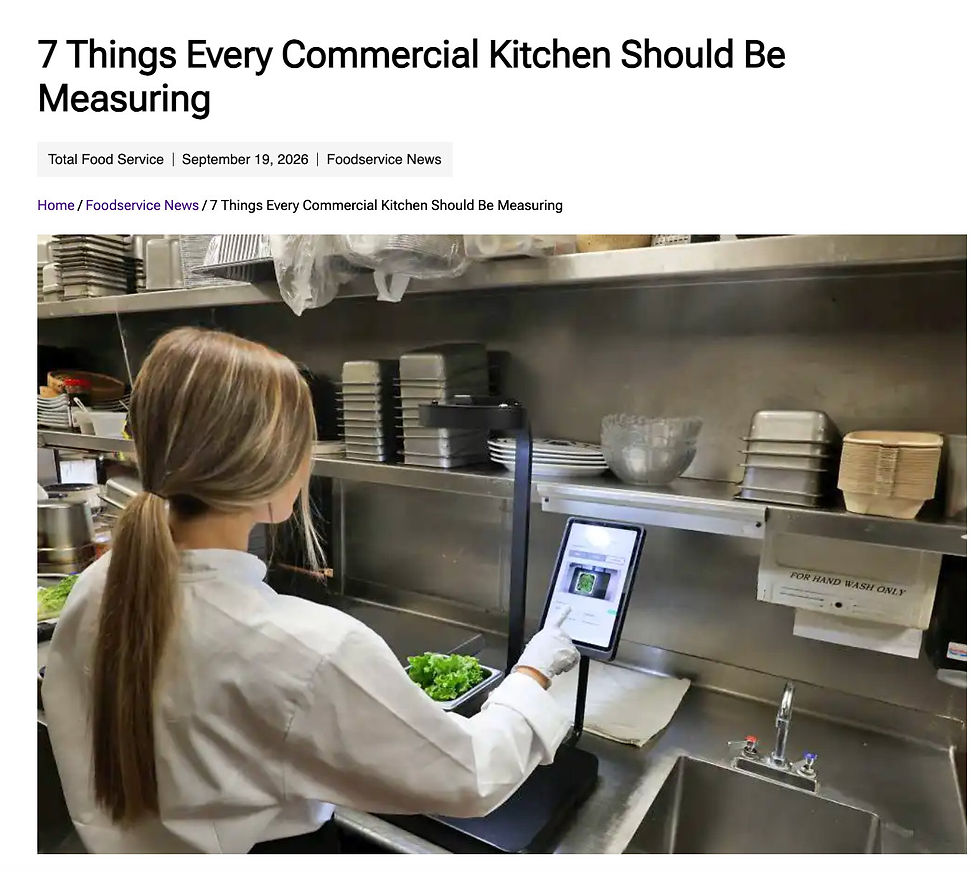
Metafoodx uses a Mobile AI Scanner placed at the dish return station. When a guest returns a tray, the scanner captures an image of the leftover food. It then identifies the items using computer vision and records the amount of waste automatically, without any manual work from staff.
All of this data is sent to the Metafoodx cloud dashboard, where operators can see:
Waste per scan, along with images of the leftover food
Trends by menu item, meal time, venue, or date range
Optional guest ratings linked with waste to understand preferences and quality
Comparisons between what was produced and what was actually consumed
Earlier systems required manual review to interpret leftovers. The updated version automates recognition, making the data faster, more consistent, and easier to scale in high-volume kitchens.
Pre-Consumer vs. Post-Consumer Food Waste: What's the Difference?
Here is the difference between the two types of food waste, which will help you identify what to fix:
Pre-Consumer Food Waste | Post Consumer Food Waste |
It happens before food reaches the guest. | This type of waste happens after food is served to the guest. |
It includes over-preparation, trimming, spoilage, and portioning errors during service. | It occurs when portions are too large, menu items are unpopular, or food quality and presentation reduce consumption. |
This type of waste is mostly controlled by the kitchen and has traditionally been the focus of waste reduction efforts. | This type of waste is difficult to track because it depends on what guests leave on their plates. |
Note: Most kitchen waste tracking tools focus on waste generated before service. Metafoodx helps fill this gap by tracking post-consumer waste, giving operators visibility into food that would otherwise go unmeasured. |
Benefits of AI in Food Waste Reduction
AI food waste tools like Metafoodx help kitchens reduce waste in ways manual tracking cannot.
1. Built for High-Volume Kitchens
AI scanning can process hundreds or thousands of trays per meal period without slowing service or increasing staff workload.
2. Tracks Waste by Menu Item
Operators can see which dishes are consistently left unfinished and make informed adjustments to recipes, portions, or menu offerings.
3. Improves Demand Forecasting
Comparing production with actual consumption helps teams forecast demand more accurately, reduce overproduction, and lower food costs.
4. ROI Within Weeks
Operators have reported up to 5-110% ROI within weeks of deployment, particularly in high-volume dining environments.
ROI of Metafoodx for Enterprise Food Service Directors
Food service directors evaluating AI waste analytics tools usually focus on three outcomes:
Reducing food cost
Improving labor efficiency
Meeting sustainability goals
Metafoodx helps improve all three by showing exactly where food is being wasted and why.
Operators using the platform have reported reduction to below 10% in food waste and up to 5-11x ROI within weeks of deployment. This impact is especially significant in universities and large food service programs, where small reductions per meal add up to large annual savings. The system also supports sustainability reporting by providing time-stamped, auditable data across the full production and consumption cycle.
Metafoodx is a 2025 Kitchen Innovations Awardee, recognized by the National Restaurant Association for improving efficiency and productivity in food operations.
A Unified View: From Prep to Plate
The post-consumer tracking mode is one of three integrated workflows inside the Metafoodx platform:
Service line consumption tracking: Monitors what is taken by guests during service
Back-of-house prep waste logging: Captures trim loss, overproduction, and prep errors
Post-consumer plate waste tracking: Records what guests leave behind at the dish return station
All three modes sync to the same cloud dashboard, giving operators a unified, time-stamped view of the full food journey.
This integration sets Metafoodx apart from tools that only track one part of the waste cycle.
“With this update, kitchens can see what was produced, what was served, what was left over, and what guests did not finish,” said Fengmin Gong, Co-Founder and CEO of Metafoodx. “The system now automatically identifies plate leftovers and surfaces menu-level trends, supporting more accurate forecasting and continuous operational improvement without adding manual steps for staff.”
Learn More About Metafoodx
Food waste in commercial kitchens is rarely a problem; it is a visibility problem.
When you cannot see what guests are leaving behind and why, every decision about portions, menus, and production is based on incomplete information. Metafoodx is an AI-powered kitchen intelligence platform that gives food service directors the complete picture, from back-of-house prep to what comes back on the tray, so every operational decision is backed by real data.
Ready to see what your kitchen data is telling you?
Tell the Metafoodx team what you are experiencing in your operation, and they will show you exactly how the platform can help.
Frequently Asked Questions
1. What is Metafoodx plate waste intelligence?
Metafoodx plate waste intelligence is an AI-powered system that tracks and analyzes what food guests leave uneaten after service. It uses computer vision to automatically identify leftover items at the dish return station, then surfaces trends by menu item, meal period, and venue inside a unified dashboard.
2. How does Metafoodx analyze plate waste?
Guests scan their trays at the dish return station using the Metafoodx Mobile AI Scanner. The system automatically identifies leftover food, records the net weight and a timestamped image, and syncs the data to the cloud dashboard without requiring manual staff input.
3. What is the difference between pre-consumer and post-consumer food waste?
Pre-consumer waste occurs before food reaches the guest: overproduction, prep loss, and spoilage. Post-consumer waste occurs after service, when guests leave food uneaten on the plate. Metafoodx tracks both, but its post-consumer mode addresses the segment most commercial kitchen tools leave unmeasured.
4. What ROI can food service directors expect from Metafoodx?
Metafoodx operators report a 50% reduction in food waste and a 5-11x ROI.
Related reading: What Guests Leave Behind: Plate Waste Tracking · Why Restaurants Misjudge Portion Sizes · College Dining Food Waste
Metafoodx is an AI-powered food intelligence platform that helps foodservice operations reduce waste, cut costs, and improve kitchen efficiency. Ready to see how we can help transform your food service operation? Book a demo with our team today.