
What Today's Chefs Are Actually Searching For: How to Order Less, Waste Less, and Run a Tighter Kitchen
- Metafoodx

- 17 hours ago
- 6 min read

There's a question running through commercial kitchens right now, in hotel banquet halls, university dining centers, hospital cafeterias, and restaurant back-of-houses alike:
How do we stop losing so much food?
It's not a new problem. But it's becoming a more urgent one. Food costs are rising. Labor is stretched thin. Sustainability expectations are climbing. Margins that were already tight have gotten tighter. Chefs and foodservice directors know waste is happening. They can feel it in their numbers, see it in their bins, and hear about it in their budget reviews. What's harder to pin down is exactly where it's coming from and what to do about it before it happens again.
Metafoodx works with commercial kitchens across restaurants, hotels, healthcare, universities, and corporate dining to give operators clear visibility into food waste from prep to plate. Chefs get accurate data on what's being produced, consumed, and lost at every stage of service, without manual tracking or end-of-week reconciliation. The goal is simple: help the people running these kitchens make better decisions with the information their operation is already generating.
Here's a look at the challenges chefs are trying to solve, and how kitchen intelligence is helping.
The Biggest Challenge in Commercial Kitchens: How to Order the Right Ingredients So We Don't Waste Quality Ingredients

Every chef has been there. You open the walk-in on a Tuesday morning and find a case of beautiful produce, ordered with the best intentions, that rotted over the weekend. It didn't go to a single plate. It went straight to the bin.
Or the opposite problem: you run short mid-service because last week's numbers didn't account for a spike in covers. So you over-order to compensate. And the cycle starts again.
Ordering the right amount of the right ingredients, consistently, week after week, is one of the most deceptively difficult parts of running a kitchen. Most operations are still doing it on gut feel, historical habit, and a lot of hoping the numbers work out. When they don't, it shows up as waste, as shortages, or as a food cost percentage that won't come down no matter what.
Metafoodx tracks exactly what's being produced, consumed, and wasted across every service period, building a clear picture of actual demand rather than assumed demand. Chefs can see which ingredients are consistently over-ordered, which items are moving faster than expected, and where purchasing quantities need to shift. Over time, that adds up to orders that match what the kitchen genuinely needs, less product sitting unused, and fewer mornings spent staring at a walk-in full of things that won't make it to service.
The Biggest Challenge in Commercial Kitchens: How to Keep My Food Fresh
Freshness affects everything in a professional kitchen: food safety, guest experience, quality standards, and cost. And yet for most operations, managing freshness is still a reactive process. You check the walk-in. You look at labels. You hope nothing slipped through.
The problem is that spoilage doesn't announce itself. Product crosses its use-by window quietly, often at the back of a shelf or behind something that moves faster. By the time it's found, it's a loss, and one that didn't have to happen.
Metafoodx's Food Quality Tracking (Mode 02) logs quality, temperature, and appearance for every dish leaving the kitchen, giving chefs a live view of what's going out and how it's holding up. The freshness alert system takes it further, monitoring inventory age in real time and flagging items approaching their use-by window while there's still time to act. That might mean getting product onto that day's specials. It might mean adjusting the next order before it goes in. Either way, chefs know about the problem in time to do something about it, instead of finding out when they're already throwing food away.
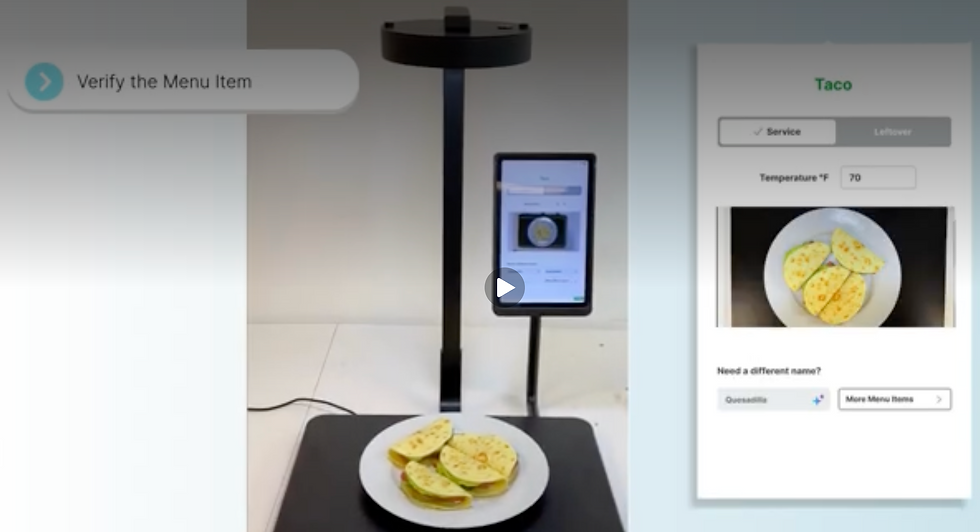
For operations where quality is central to the guest experience, that kind of early visibility makes a real difference, both in what goes out to guests and in what doesn't go into the trash.
The Biggest Challenge in Commercial Kitchens: How to Make the Right Amount of Food for a Buffet

Ask any chef who runs a buffet what keeps them up at night, and the answer is usually some version of the same thing: you never quite know how much to make.
Make too little, and the line runs dry. Guests are disappointed, staff are scrambling, and the reputation of the operation takes a hit. Make too much, and you're scraping down full pans at the end of service, watching good food and real money go into the trash. Most operations settle into a pattern of deliberate over-production just to avoid the first scenario, accepting the waste as the cost of running a reliable service.
Metafoodx's Service-Line Tracking (Mode 01) gives chefs a live view of consumption, temperature, and leftovers per menu item throughout service. Instead of estimating from last week's numbers, culinary teams can see what's actually moving and adjust on the fly. Over time, those daily snapshots build a reliable picture of what each dish needs at each service, on each day of the week, accounting for seasonal patterns and cover counts. Kitchens using Service-Line Tracking have reported cutting overproduction by up to 90%.
For catering, Catering Intelligence (Mode 04) tracks every event by BEO number from production through leftovers, with automated reporting that shows exactly what was produced, what was consumed, and where the gaps were. Instead of estimating after the fact, chefs have an accurate record of how each event performed, and a growing library of data to plan the next one better.
Closing the Loop: What Guests Leave Behind
Production decisions don't end at the service line. They extend all the way to the plate, and what guests leave behind tells chefs something important about whether portions, preparation, and menu choices are landing the way they should.
Post-Consumer Tracking (Mode 03) captures that information in real time. Guests scan plates in just 2 seconds, giving the kitchen immediate visibility into portion accuracy and plate waste. When a dish is consistently coming back half-eaten, that's a signal about portion size, preparation, or whether it belongs on the menu at all. Chefs get that feedback while it's still useful, not after the next menu cycle has already been planned.
Food Cost Control: Knowing Where the Money Is Going
Food cost control matters to every chef and foodservice director. The challenge is that most kitchens are trying to manage it without reliable data on where costs are actually being lost.
With visibility across all four tracking modes, chefs can see exactly what's driving food costs in their operation: overproduction at the service line, prep waste by station, catering variances between production and consumption, inventory items consistently over-ordered or lost to spoilage, portioning that drifts across service periods. With that picture in hand, the fixes become much more specific than a general push to "reduce waste." Chefs know which station, which menu item, which event type, and which day of the week is driving the biggest losses, and they can address each one directly.
Sustainability That Shows Up in the Numbers
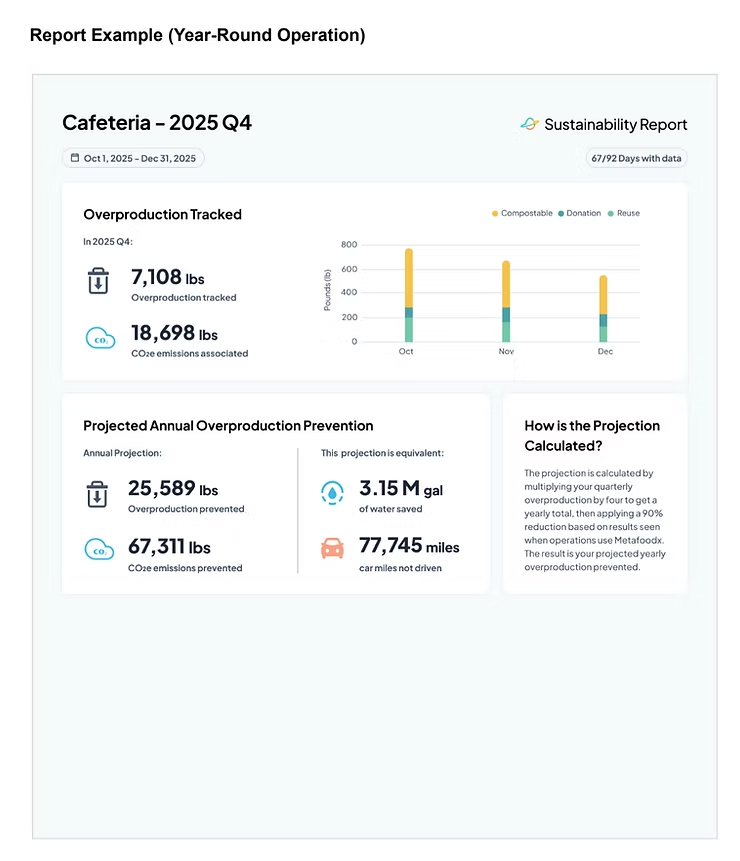
Reducing food waste is the most direct way most commercial kitchens can lower their environmental footprint. Restaurants, hotels, universities, healthcare systems, and corporate dining programs are all facing growing pressure to show progress on sustainability, and food waste data is increasingly central to that reporting.
With Metafoodx, that data is tracked automatically and accurately across every service period. Chefs don't have to build a separate reporting process or rely on estimates. The waste data the kitchen generates in the normal course of operations becomes the basis for sustainability reporting, ESG metrics, and internal goals. And because reducing waste and reducing costs point in the same direction, improving sustainability performance and improving financial performance become the same work, not competing priorities.
What Better Decisions Look Like Day to Day
The chefs getting the most out of kitchen intelligence aren't doing anything fundamentally different from what they've always done. They're ordering, prepping, cooking, and serving. What's changed is the quality of information they're working from. Every kitchen generates this information. Most of it goes untracked. Metafoodx captures it and puts it to work.
With Metafoodx across all four modes, chefs can:
Order based on what the kitchen actually uses, not what it's always ordered
Catch freshness issues in time to redirect product rather than discard it
Produce the right amount for each buffet and catering event, backed by real service data
See what guests are leaving on the plate and adjust accordingly
Track food costs at the level of station, menu item, and event, not just overall percentage
Report on waste reduction with accurate numbers rather than estimates
Learn More About Metafoodx
Metafoodx is a kitchen intelligence platform that helps commercial kitchens track and reduce food waste across service lines, food quality, post-consumer data, and catering operations.We work with restaurants, hotels, healthcare systems, universities, and corporate foodservice operators who want to run tighter, more sustainable kitchens.
Book a demo and see how it works for your operation.


Comments