
How to Track Food Waste in Restaurants
Updated: 4 days ago
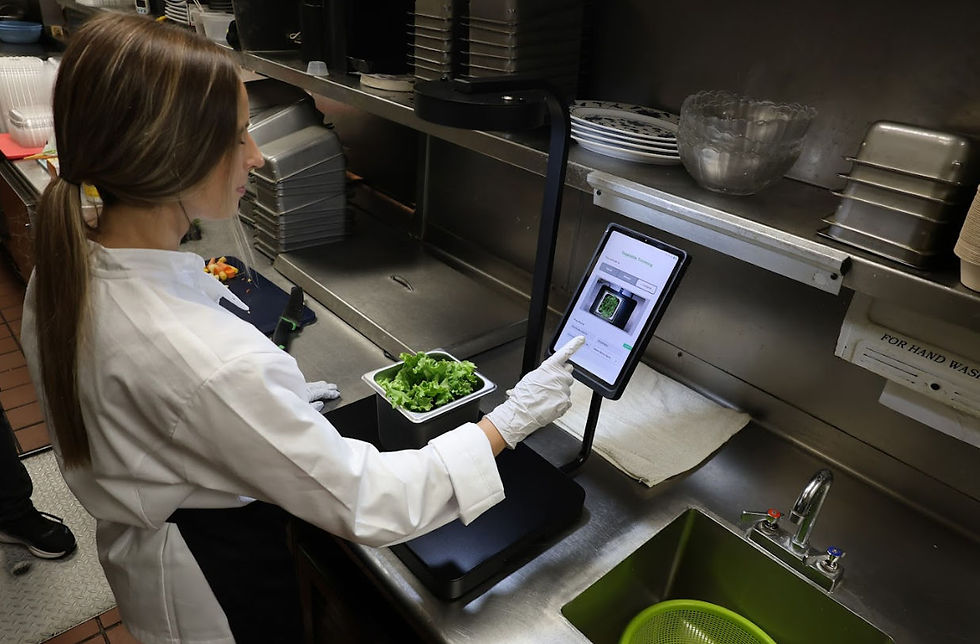
Food waste is one of the biggest hidden expenses in the hospitality industry. Restaurants, hotels, cafés, catering businesses, and commercial kitchens lose thousands of dollars every year because of overproduction, spoilage, preparation mistakes, and plate waste. Yet many businesses still rely on manual logs, spreadsheets, or guesswork to manage it.
Measuring comes first for a reason. In a Champions 12.3 study of 114 restaurants, measuring was the first of five steps behind a 26% average cut in kitchen food waste in the first year.
New to the topic? Start with our guide to what a food waste tracking system is and how it works.
Today, restaurant operators are moving toward smarter and data-driven solutions that improve efficiency, reduce operational waste, and support sustainability goals. This is where modern food waste tracking solutions are transforming the industry.
With AI-powered platforms like Metafoodx, businesses can automate waste monitoring, gain accurate insights, and dramatically reduce unnecessary food loss. Metafoodx customers have cut overproduction by more than 50%.
In this guide, we will explore how restaurants can track food waste effectively, why traditional methods fail, and how AI-driven automation is changing commercial kitchen operations.
Why Food Waste Tracking Matters in Restaurants
Food waste impacts much more than just food costs. It affects profitability, labor efficiency, inventory management, sustainability efforts, and customer experience.
Restaurants often lose revenue through:
Overstocking ingredients
Incorrect portion sizes
Expired inventory
Overproduction during prep
Unused buffet items
Customer plate waste
Inaccurate forecasting
Without a proper food waste tracking system, businesses cannot identify where losses happen or how to prevent them.
According to industry research, food waste can account for a significant percentage of operational expenses in hospitality businesses. Even small improvements in tracking can lead to major savings over time.
Modern restaurant operators now understand that waste tracking is not just about sustainability - it is a profitability strategy.
What Is Food Waste Tracking?
Food waste tracking is the process of monitoring, recording, analyzing, and reducing food waste generated during restaurant operations.
A complete tracking process includes:
Identifying wasted food items
Measuring quantities
Categorizing waste reasons
Tracking waste locations
Monitoring patterns over time
Generating reports and insights
Creating actionable reduction strategies
Restaurants use this data to improve purchasing decisions, optimize menu planning, reduce spoilage, and increase kitchen efficiency.
Traditional tracking methods involve manual data entry, which is often inaccurate and time-consuming. Modern AI-powered systems automate the process for better accuracy and faster insights.
The Biggest Challenges Restaurants Face With Food Waste
Many restaurants know they have waste problems but struggle to identify the exact causes.
1. Manual Tracking Is Time-Consuming
Kitchen staff already operate under pressure. Asking employees to manually log every wasted item creates inconsistencies and incomplete data.
This often results in:
Missing records
Human errors
Inaccurate reporting
Low staff participation
2. Lack of Real-Time Visibility
Most traditional systems only provide end-of-day or weekly summaries. By the time managers review the data, the waste has already happened repeatedly.
3. Difficulty Identifying Waste Patterns
Without proper analytics, restaurants cannot identify trends such as:
Frequently wasted menu items
Overproduction patterns
Inventory forecasting issues
Recurring waste by meal period
4. Multi-Location Complexity
Restaurant groups and hotels often struggle to standardize waste reporting across multiple kitchens and locations.
This is why businesses are now investing in AI-driven food waste tracking software that automates the entire process.
How Modern Food Waste Tracking Software Works
Modern platforms use artificial intelligence, computer vision, and smart analytics to automate food waste monitoring.
Instead of relying on manual entry, systems like Metafoodx use advanced scanning technology to recognize food items automatically.
Key Features of Modern Food Waste Tracking Software
AI-Powered Food Recognition
The system identifies food items through image recognition technology and logs waste automatically.
Real-Time Analytics
Managers receive instant visibility into waste trends and operational inefficiencies.
Automated Reporting
Reports help restaurants monitor:
Food cost losses
Waste categories
Inventory performance
Menu profitability
Sustainability metrics
Multi-Location Monitoring
Restaurant groups can track waste across multiple kitchens from one centralized dashboard.
Integration With Kitchen Operations
Modern systems connect with inventory management, procurement, and POS systems for more accurate forecasting.
This level of automation significantly improves operational efficiency while reducing labor burden.
Benefits of Using a Food Waste Tracker
Implementing a smart food waste tracker offers both financial and operational advantages.
1. Reduced Food Costs
The most immediate benefit is lower food purchasing costs.
Restaurants can:
Reduce over-ordering
Improve inventory usage
Prevent spoilage
Optimize menu planning
2. Higher Profit Margins
Waste reduction directly improves profitability.
By identifying unnecessary losses, restaurants can increase margins without raising menu prices.
3. Better Inventory Management
Waste tracking reveals how ingredients move through the kitchen.
Restaurants can:
Forecast demand more accurately
Adjust purchasing behavior
Reduce storage waste
Improve stock rotation
4. Improved Sustainability Goals
Consumers increasingly support environmentally responsible brands.
Reducing food waste helps restaurants:
Lower landfill contributions
Reduce carbon emissions
Improve ESG reporting
Support sustainability initiatives
Hotels and restaurants can also strengthen brand reputation through measurable sustainability efforts.
5. Smarter Menu Engineering
Tracking waste helps identify low-performing menu items.
Restaurants can:
Remove unpopular dishes
Adjust portion sizes
Optimize ingredient usage
Improve menu profitability
Why Restaurants Are Automating Food Waste Tracking
The hospitality industry is moving toward automation because manual systems are no longer efficient at scale.
Automating food waste tracking in hotels and restaurants allows businesses to gain accurate insights without interrupting kitchen workflows.
AI-powered automation eliminates common problems such as:
Manual data entry errors
Inconsistent reporting
Missing waste records
Labor inefficiencies
Automation also creates real-time visibility, allowing operators to make faster decisions.
For hotels with buffets, banquet operations, and multiple kitchens, automation becomes even more valuable because of the complexity involved in food preparation and waste monitoring.
How AI Is Transforming Food Waste Tracking Systems
Artificial intelligence is making waste management smarter, faster, and more scalable.
Platforms like Metafoodx process millions of food scans and identify waste patterns with high accuracy.
AI Helps Restaurants By:
Detecting frequently wasted ingredients
Predicting overproduction
Identifying inefficient preparation methods
Improving demand forecasting
Supporting menu optimization
The result is more efficient kitchens and stronger operational control.
What To Look For in a Food Waste Tracking System
Not all platforms offer the same level of functionality. Restaurants should evaluate systems carefully before implementation.
Important Features Include:
Automated Food Recognition
AI-powered image recognition reduces manual work.
Real-Time Reporting
Operators should access live dashboards and analytics.
Easy Kitchen Integration
The system should fit naturally into existing workflows.
Scalability
Restaurants with multiple locations need centralized reporting capabilities.
Sustainability Metrics
The platform should support ESG and sustainability reporting.
Data Accuracy
Accurate tracking is essential for meaningful operational decisions.
Choosing the right food waste tracking system can significantly impact long-term profitability.
How to Evaluate a Food Waste Monitoring System
A food waste monitoring system should help the team connect each waste record to a decision. In a pilot, check whether the record includes the menu item, quantity, measurement unit, meal period, location, and reason for waste. Keep preparation waste, spoilage, unserved food, and plate waste distinct so that totals do not hide the cause.
Test the workflow during an ordinary busy shift. Ask staff to demonstrate how they record an unfamiliar item, correct a misclassification, and identify the reason for disposal. Review missing entries and the time spent recording data as well as the dashboard's appearance.
Compare the same menu cycles before and after a change, and normalize waste by covers served. Review waste weight, ingredient cost, and stockouts together. Lower waste during a quieter week does not by itself demonstrate better performance.
For a broader evaluation checklist covering forecasting, implementation, and total cost, see our guide to choosing a kitchen intelligence system.
Once measurement is consistent, use it to prioritize changes to prep, portions, and purchasing. Our eight practical ways to reduce restaurant food waste connects those operational changes to the data.
For properties with several dining outlets and variable service demand, see how casino resorts use AI kitchen technology to reduce food waste.
Best Practices for Tracking Food Waste in Restaurants
Technology alone is not enough. Restaurants should combine software with operational strategies.
1. Categorize Waste Properly
Track waste by:
Spoilage
Preparation waste
Plate waste
Overproduction
Expired inventory
This helps identify root causes more effectively.
2. Train Kitchen Staff
Employees should understand:
Why tracking matters
How waste impacts profitability
How the system works
Staff participation improves data quality and accountability.
3. Review Reports Regularly
Managers should analyze waste reports weekly to identify trends and opportunities.
4. Adjust Purchasing Based on Data
Use waste insights to optimize inventory purchasing and reduce overstocking.
5. Optimize Portion Sizes
Plate waste often indicates oversized portions.
Adjusting serving sizes can reduce waste without affecting customer satisfaction.
Food Waste Tracking in Hotels
Hotels face unique waste challenges because of:
Buffets
Banquets
Room service
Multiple kitchens
Variable guest demand
This is why automating food waste tracking in hotels has become a growing priority in hospitality management.
AI-powered systems help hotels:
Track buffet waste
Monitor banquet leftovers
Improve forecasting accuracy
Reduce operational losses
Meet sustainability targets
Large hotel groups especially benefit from centralized analytics across multiple properties.
The Role of Sustainability in Modern Hospitality
Sustainability is no longer optional in hospitality. Customers, investors, and regulators increasingly expect restaurants and hotels to reduce environmental impact.
Food waste reduction supports:
ESG reporting
Carbon reduction goals
Sustainable sourcing initiatives
Brand trust and reputation
Restaurants that actively reduce waste often gain stronger customer loyalty and operational efficiency simultaneously.
Common Mistakes Restaurants Make When Tracking Food Waste
Even with software, some businesses struggle because of poor implementation.
Mistake 1: Inconsistent Tracking
Incomplete data creates inaccurate insights.
Mistake 2: Ignoring Analytics
Collecting data without acting on it limits results.
Mistake 3: Lack of Staff Involvement
Employees must understand the purpose behind tracking initiatives.
Mistake 4: Choosing Complex Systems
Solutions should simplify workflows, not complicate them.
Mistake 5: Focusing Only on Costs
Waste tracking should support broader operational improvements, not just food savings.
The Future of Food Waste Tracking
The future of hospitality operations is increasingly data-driven.
AI and automation will continue improving:
Predictive forecasting
Inventory intelligence
Smart kitchen operations
Sustainability reporting
Automated decision-making
As technology advances, restaurants will gain even greater control over food costs and operational efficiency.
Businesses that adopt intelligent tracking systems early will likely gain a competitive advantage in profitability and sustainability.
Why Restaurants Are Choosing Metafoodx
Modern hospitality businesses need smarter tools that reduce waste without increasing operational complexity.
Metafoodx combines AI-powered food recognition, automation, and real-time analytics to help restaurants and hotels optimize kitchen performance.
Key platform advantages include:
Customers have cut overproduction by more than 50%
5 to 11x ROI
Automated waste monitoring
Real-time operational insights
Scalable solutions for restaurants and hotels
By simplifying waste tracking and delivering actionable insights, AI-driven systems help hospitality businesses improve both profitability and sustainability.
Final Thoughts
Food waste remains one of the biggest hidden costs in restaurant and hotel operations. Traditional manual tracking methods are no longer sufficient for modern hospitality environments.
Implementing intelligent food waste tracking software helps restaurants gain visibility into operational inefficiencies, reduce unnecessary losses, and improve profit margins.
AI-powered platforms are transforming how kitchens manage inventory, forecasting, menu planning, and sustainability initiatives. From small restaurants to large hotel chains, businesses are increasingly investing in automated solutions to stay competitive.
Whether you operate a restaurant, hotel, catering business, or commercial kitchen, adopting a modern food waste tracking system can lead to measurable financial savings and stronger operational performance.
As the hospitality industry continues evolving, businesses that embrace automation and AI-driven waste management will be better positioned for long-term growth, sustainability, and profitability.
Frequently asked questions
What is the best way to track food waste in a restaurant?
Record what's thrown out by menu item and reason, every day. Software that scans food does this in seconds instead of relying on paper logs.
What should restaurants track besides waste?
What was prepped and what was sold. Comparing all three shows whether the waste comes from cooking too much, from prep, or from plates.
How often should a restaurant review food waste data?
Daily for quick fixes like prep amounts, and weekly for bigger patterns. Read Why Every Kitchen Needs a Daily Production Review.
What are the best food waste tracking solutions for multi-site restaurant chains?
Ones that track every location the same way and show all sites in one dashboard, so you can compare stores and spread what works. Metafoodx's Global View does this across every location.
What are the alternatives to manual food waste tracking in hotels?
Smart scales, camera-based AI tracking, and full kitchen intelligence platforms. AI tracking removes most of the manual logging and records waste by menu item, which shows the kitchen exactly what to cook less of.
Related reading: How to Reduce Food Waste in Restaurants
Metafoodx is an AI-powered food intelligence platform that helps foodservice operations reduce waste, cut costs, and improve kitchen efficiency. Ready to see how we can help transform your food service operation? Book a demo with our team today.


