How to Implement an AI Food Waste Tracking System in a Commercial Kitchen
Updated: 8 hours ago

For many food service directors, the day begins with a familiar set of questions. How much food should be prepared for today’s service? Did yesterday’s purchasing orders match demand? Will rising ingredient prices push the week’s menu over budget?
New to the topic? Start with our guide to what a food waste tracking system is and how it works.
Running a commercial kitchen means balancing many priorities at once: staffing, menu planning, food safety compliance, sustainability reporting, and the constant pressure to control costs. Food waste often sits at the center of these challenges. When ingredients are over-ordered, over-prepared, or thrown away after service, the financial impact can add up quickly.
Much of the food wasted in restaurants happens after the meal reaches the table. A March 2026 report from ReFED found that nearly 70% of restaurant food waste comes from what diners leave uneaten, while only about 20% of restaurants actively track plate waste. Despite the scale of the problem, many kitchens still lack clear visibility into where food loss actually occurs.
Why Waste Is Hard to Measure
In theory, tracking food waste sounds simple: record what is thrown away and analyze the results. In practice, busy kitchens make that difficult.
Most commercial kitchens operate under intense time pressure. Staff are focused on preparing meals, maintaining food safety standards, and keeping service moving. During peak periods, stopping to manually log wasted ingredients or weigh leftovers rarely becomes a priority.
Without consistent measurement, food service directors are often left relying on intuition when planning production levels or purchasing ingredients.
A Familiar Challenge in Commercial Kitchens
The challenge becomes even more visible in large conference venues. A conference center food service director may oversee dozens of events in a single week including corporate breakfasts, multi-day training sessions, and large evening banquets.
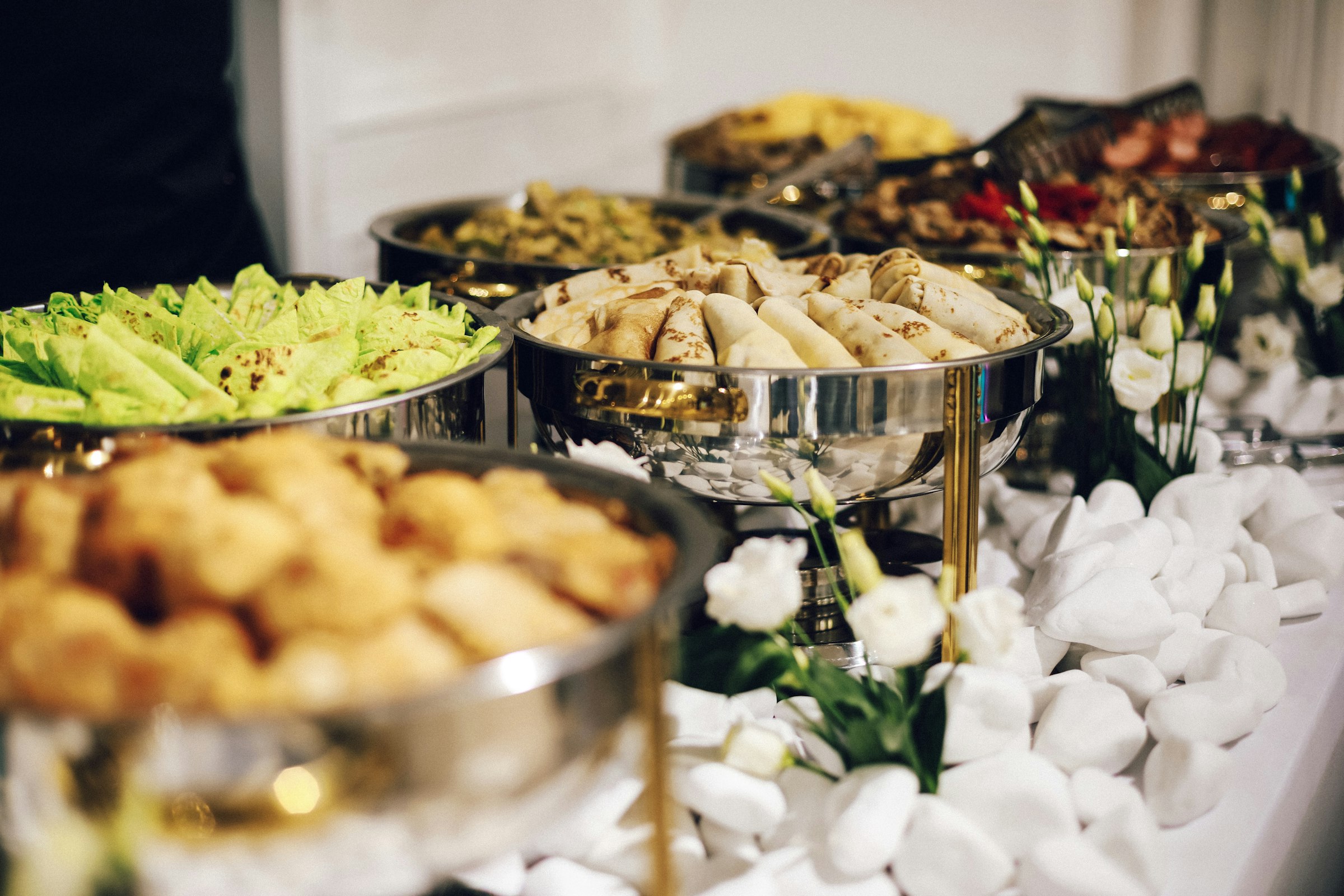
Attendance numbers shift constantly. A breakfast ordered for 200 guests might only serve 150. Another group might arrive with more attendees than expected. To avoid running out of food, the kitchen prepares extra trays for buffets and plated events. But when service ends, pans of roasted potatoes, rice, pastries, or fruit often return to the dish area untouched.
Standing in the kitchen after service, the question is always the same: Did we cook too much, or did guests simply not choose those items? Without reliable data, the answer is hard to find.
How AI Food Waste Tracking Systems Work
AI-powered food waste tracking systems help kitchens answer that question. Installed near prep stations, dish return areas, or waste bins, these systems record discarded food automatically using scanners, sensors, or connected scales. Instead of requiring staff to log every item manually, the system captures waste data as part of the normal workflow.
Over time, the software builds a clearer picture of waste patterns which shows which ingredients are frequently discarded, which menu items generate plate waste, and when excess production tends to occur. Platforms like Metafoodx integrate this process into everyday kitchen operations so staff can continue working at full speed while managers gain better visibility into food loss.
A Practical Rollout Checklist for Your First Menu Cycle
Start with one station, one meal period, and a named shift owner. The sequence below is a suggested pilot workflow; the time needed depends on your menu cycle and staffing.
1. Define the baseline. Record covers served, production quantities, unserved returns, and disposal reasons across comparable services before changing batch sizes. Keep the menu, portion size, and measurement units consistent.
2. Map the handoffs. Identify where food leaves production and where unserved pans return. Keep preparation waste, unserved leftovers, and plate waste separate. Record donations and reuse separately from disposal, and avoid counting the same food at more than one stage.
3. Check the equipment and item names. Confirm the pan tare and units, use consistent menu-item labels, and compare a sample of recorded weights with a known reference. Ask the shift owner to review unfamiliar items and corrections.
4. Rehearse during a normal service. Have staff demonstrate a scan, a correction, and the return workflow. Record missed entries and any queue at the scanner. Adjust placement or responsibilities before expanding the pilot.
5. Review one change at a time. Select an item with repeated unserved returns and test a smaller initial batch with a replenishment plan. Track stockouts, substitutions, leftovers per cover, and staff workload across the next comparable services.

The Metafoodx product overview shows the scanner and scan log. During a demo, use one of your own menu items to walk through the outbound scan, returned food, and the resulting record.
Customer Evidence: Use the Same Operational Questions
In the customer testimonial on Metafoodx’s homepage, Mayan Princess Beach & Dive Resort General Manager Juan Gomez de la Torre describes using visibility into overproduced dishes and guest demand to adjust kitchen production. This qualitative account supports the workflow; it is not a savings guarantee or a controlled pilot result.
For your pilot, document the baseline dates, covers, menu items, production changes, and service outcomes. That makes your own result more useful than a percentage without its measurement method.
Turning Waste Data Into Better Decisions
Once waste becomes visible, operational improvements often follow. Kitchens may discover that certain side dishes consistently return uneaten, or that buffet portions are larger than most guests actually consume. Others identify ingredients that spoil before they can be fully used.
Research from ReFED suggests that oversized portions are one of the biggest drivers of restaurant food waste. Offering more flexible portion sizes could reduce as much as 2.35 million tons of food waste annually, representing an estimated $547 million in potential savings for the foodservice sector. Insights like these allow food service directors to adjust portion sizes, refine menu planning, and better align production with actual demand.
Connect Waste Tracking to Your Next Production Plan
Assign a clear owner to review the data with the kitchen team. Keep preparation waste, unserved leftovers, and plate waste separate, then compare results for the same menu item and meal period. This helps distinguish excess production from portion-size or menu-acceptance issues.
Choose one practical change to test, such as reducing an initial batch for an item that repeatedly returns unserved. Record the planned quantity, actual production, leftovers, and any stockouts so the team can assess the effect at the next comparable service.
For a worked portion-and-weight calculation and a review checklist, read our guide to AI food demand forecasting.
If you are comparing platforms before a rollout, use our guide to choosing a food operations intelligence platform to assess data capture, staff effort, forecasting, integrations, and total cost.
Worked Example: From One Service to the Next Batch Plan
The following numbers are hypothetical and demonstrate a measurement method, not a customer result or a software-generated recommendation.
Capture: at one lunch station, 10 comparable services each serve 500 covers. Average production of one side dish is 180 lb per service; 60 lb returns unserved. That is 0.12 lb of unserved food per cover. Record outbound and return pan weights using the same tare procedure. Track reuse, donation and disposal separately; keep preparation waste and plate returns outside this particular measure.
Review: the chef checks the menu, attendance, item selection, batch timing and missed scans before interpreting the returns. A 60 lb unserved return does not prove that every future service should produce 60 lb less. Some food may be safely reused or donated, and demand varies.
Decision: as an example test, reduce the initial batch from 150 lb to 120 lb and retain a 30 lb replenishment option. The shift lead checks remaining food and demand before cooking the refill. Keep the usual food-safety procedures and record run-outs, substitutions, guest feedback and staff effort.
Follow-up: across the next 10 comparable services, suppose covers remain 500 and average unserved returns are 40 lb. The rate is now 0.08 lb per cover, a 33.3% reduction in this defined unserved-food measure. This is not a reduction in all food waste, nor verified purchasing savings. Compare capture completeness and service quality before accepting the change; extend the test if the service mix or data coverage changed.
For a real pilot, retain the dated scan or export records, annotated report, decision log and follow-up results. Have the responsible chef and finance reviewer confirm the interpretation before presenting it as customer evidence.
Use the daily production review guide to assign the review and next-batch decision.
Define the recording scope with the food waste tracking guide.
Supporting the Modern Dining Team
Managing a commercial kitchen has never been more complex. Food prices fluctuate, sustainability expectations are rising, and operators are expected to run efficient kitchens with limited resources.
AI-powered platforms like Metafoodx provide something many kitchens have never had before: clear visibility into what happens after food leaves the kitchen line. For food service directors and dining teams planning the next week of events, that visibility matters. Instead of guessing why food returns uneaten or ingredients spoil, they can see patterns in the data and adjust production, menus, and purchasing accordingly.
When waste becomes visible, it becomes something kitchens can actively manage.
Frequently asked questions
Where should you scan food in a kitchen?
Where food changes hands: when it goes out to the line, when it comes back, and at the plate return. Those three points show what was cooked, served, and thrown out.
Do staff need training to use AI food waste tracking?
A little. Staff need to know where and when to scan. With Metafoodx, a scan takes about two seconds and the system recognizes the item, so there's very little to type.
How do you turn waste data into a production plan?
Find the items with the most left over and cook less of them next time. Metafoodx's Automatic Production Planning builds a prep list from what was actually eaten.
Which food waste tracking systems are easiest to integrate into existing kitchen setups?
The ones that fit your current workflow instead of adding steps. Look for fast scans at the points where food already changes hands, and integrations with your menu software. Metafoodx scans in about two seconds and connects with menu systems like Jamix and Parsley.
Related reading: Food Waste Tracking Software: A Buyer's Checklist · Why Most Kitchen Tracking Systems Fail · How to Conduct a Food Waste Audit
Metafoodx is a food operations intelligence platform that captures the food journey from prep to plate, so foodservice teams can lower food cost, produce more accurately, and prevent waste before it happens. Ready to see how we can help transform your food service operation? Book a demo with our team today.