
How Eaping Used Real-Time Monitoring to Keep Food Fresh and Ready to Serve
Updated: 3 hours ago

Managing food holding times during high-volume service periods is one of the toughest operational tightropes a foodservice leader has to walk. Whether you are directing a healthcare dining operation, a university campus food court, a senior living community, or a fast-casual restaurant, your daily goals remain the exact same: you need to keep service moving with constantly available food, all while keeping a hawk-eye on overproduction and food waste to protect your tight margins.
At Eaping Fresh Chinese Restaurant, a high-volume fast-casual concept, the kitchen staff faced these hurdles every shift. While their Point of Sale (POS) data showed what was selling, it couldn't show what was happening on the hot-holding line in real time. Without clear visibility into exact holding times and food conditions, staff had to rely on guesswork and manual log checks to decide when to replenish, rotate, or pull a dish.
The Operational Challenges of High-Volume Foodservice

During the lunch and dinner rushes, the Eaping team prioritized speed: keeping serving pans full and lines moving. But during slower transition periods, overproduction quickly led to quality degradation—resulting in dry or soggy dishes, and food sitting far past its optimal holding window.
Kitchen managers found themselves repeatedly asking:
Do we fire another batch right now, or wait?
How long has this specific pan been sitting on the line?
Should we discard this item or top it off?
Because these decisions were made dozens of times a day based on gut feel rather than data, the operation suffered from inconsistent food quality, extended holding times, and costly food waste. For a Dining Director, these aren't just kitchen issues, they directly hit your labor efficiency, regulatory compliance, brand reputation, and bottom-line profitability.
Implementing Real-Time Temperature Alerts and Holding Time Monitoring
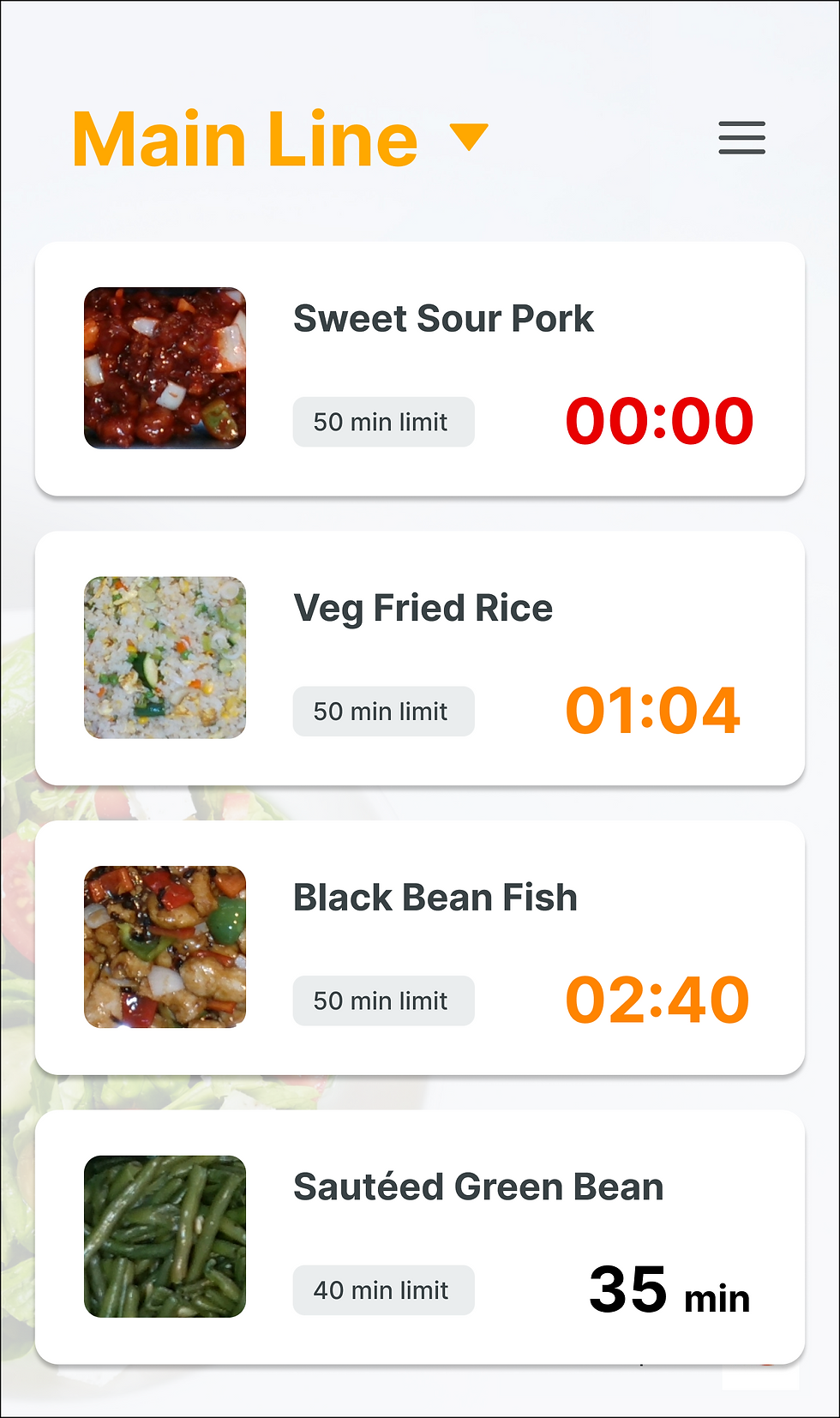
To eliminate the guesswork, Eaping integrated Metafoodx’s real-time food monitoring platform, leveraging its Freshness Alerts system.
The process was simple enough not to disrupt the kitchen workflow. When a fresh food pan is placed on the line, kitchen staff scan it. The system automatically begins tracking its exact lifecycle based on that specific menu item's unique holding parameters, providing immediate, automated visual guidance via three distinct stages:
🟢 Normal Status: Food is fresh and within optimal holding windows.
🟨 Warning Alert: The holding window is closing; action will be needed soon.
🟥 Critical Alert: Action is required immediately (replenish, rotate, or discard).
Instead of relying on memory, kitchen timers, or manual clipboards, the frontline team has automated, ambient guidance running in the background.
Actionable Operational Intelligence for Managers
Beyond frontline alerts, the platform captures backend data that gives Dining Directors full operational transparency. Managers can review comprehensive dashboards detailing scan compliance, alert history, exact holding durations, and digital temperature records. This shifts the management style from reactive firefighting to proactive, data-driven coaching.
Improving Production Planning Throughout the Day

One of the greatest benefits of the Metafoodx platform was its impact on production planning. Most kitchens overproduce "just in case" demand spikes. While this avoids stockouts, it creates a massive waste problem during slower mid-afternoon or late-evening periods. With real-time consumption and production tracking, Eaping optimized their kitchen output across all shifts:
Service Period | Before Metafoodx | After Metafoodx (With Automated Insights) |
Slower Periods | Large batches made out of habit; food aged on the line; high waste. | Smaller batches produced; fresher food on the line; minimal waste. |
Peak Periods | Reactive cooking; delayed replenishment; slower service lines. | Predictive timing; kitchen stays ahead of demand; smoother service flow. |
The Results: 30% Fewer Temperature and Holding-Time Alerts

By transitioning to a proactive, data-driven kitchen model, Eaping saw measurable improvements within months. Data captured between September 2025 and March 2026 revealed that total temperature and holding-time alerts were reduced by approximately 30%, with the six highest-volume menu items showing the most drastic improvements. Staff dramatically improved their replenishment timing, which meant food quality and freshness became consistent regardless of the time of day.
Reducing Staff Stress While Improving Accountability
Foodservice technology should make your team’s job easier, not add to their cognitive load. The Metafoodx alert system operates quietly in the background, minimizing the need for constant manual temperature checks or mental math. As Eaping owner Allen Shi notes:
"Since using Metafoodx, we've seen real improvements in food freshness and quality consistency. Staff are more accountable too—the alert system keeps everyone on track without being disruptive to our fast-paced kitchen workflow."
Why Foodservice Directors Should Pay Attention
As a Dining Director, managing margins while maintaining high-quality standards is harder than ever under current labor constraints. Metafoodx offers an enterprise-level solution that helps you standardize quality across multiple locations, reduce temperature deviations, and protect your food costs by eliminating overproduction waste.
Download the Full Eaping Case Study
Ready to see how real-time kitchen intelligence can transform your food service operations? Download the complete case study to discover data-backed best practices for holding-time optimization, actionable kitchen strategies to curb overproduction waste, and the exact metrics Eaping used to measure their operational success.
Frequently Asked Questions (FAQ)
How does real-time food holding monitoring differ from standard POS data?
Point of Sale (POS) data is retrospective—it tells you what sold and when, but it cannot track the actual condition or age of the food currently sitting on your serving line. Real-time food holding monitoring bridges this gap by tracking the exact lifecycle of a food pan from the moment it is scanned onto the line, giving kitchen teams immediate visibility into freshness and holding windows before quality degrades.
Can a food holding alert system integrate with existing kitchen workflows without slowing down service?
Yes. Modern kitchen intelligence systems like Metafoodx are designed to operate as ambient technology. Staff simply scan a pan upon placement, and the system handles the tracking quietly in the background using visual, color-coded alerts. This eliminates the need for manual kitchen timers, paper logbooks, and mental math, actually speeding up service by removing operational guesswork during peak rushes.
What impact does predictive replenishment timing have on food costs?
Predictive replenishment directly combats overproduction, a large driver of food waste. By using real-time data to adjust batch sizes between peak rushes and slower transition periods, operations can maintain full lines when busy, while ensuring smaller, fresher batches are produced during slower intervals, significantly lowering food costs and protecting margins.



Comments