
How College Dining Programs Reduce Food Waste and Meet Sustainability Goals
- Metafoodx

- Jun 24
- 4 min read

Higher education institutions face immense pressure to lead the charge in environmental stewardship. With student populations increasingly prioritizing climate action, university auxiliary services must look directly at their largest environmental footprint: campus dining halls. Managing food operations for thousands of students presents a massive sustainability challenge. Because traditional campus meal plans rely on all-you-care-to-eat models, these facilities inherently incentivize over-ordering and bulk production.
To hit aggressive campus zero-waste deadlines, university dining directors are shifting away from reactive composting initiatives. Instead, they are implementing data-driven kitchen intelligence to stop food waste at the source.
The Scale of the Campus Food Waste Challenge
The volume of food discarded on college campuses is significantly higher than in comparable commercial sectors.
Data from a joint study by the Natural Resources Defense Council (NRDC) and Bon Appétit Management Co. reveals that college students generate an average of 112 pounds of food waste per person each school year. The research highlights that higher education accounts produce 2.18 ounces of plate waste per guest per meal, which is more than double the volume generated by corporate dining environments.
This waste stream stems from two distinct operational bottlenecks:
Pre-Consumer Overproduction: Kitchens batch-cook massive volumes of food to keep service lines visually populated through the very end of the dining shift.
Post-Consumer Plate Waste: The buffet-style nature of campus dining allows students to load plates with unfamiliar dishes or oversized portions, resulting in heavy tray scraps.
Behavioral Nudges vs. Operational Precision
Many universities initially attempt to curb waste through student-facing marketing campaigns or physical adjustments in the front of the house.
A multi-campus plate study published by the University of Illinois Department of Agricultural and Consumer Economics found that shifting from traditional round plates to oval plates with smaller surface areas successfully reduced student food waste from 15.8% to 11.8% of total food selected. Similarly, stripping trays from the dining hall forces students to make multiple trips, naturally reducing impulse portioning.
While these behavioral "nudges" help mitigate plate waste, they do not solve the root financial and environmental issue. The vast majority of resource loss occurs in the back of the house before food ever crosses the service counter. To make a permanent dent in carbon footprints, dining programs must align kitchen production with live, localized consumption data.
The True Cost of Dining Hall Surpluses
When a campus dining hall overproduces, the institution loses much more than the raw cost of the ingredients.
Operational Resource | Impact of Overproduction | Sustainability Consequence |
BOH Culinary Labor | Hours spent prepping high-volume batch items that go straight to the bin | Inefficient allocation of university auxiliary budgets |
Water and Energy | Sunk utilities from continuous refrigeration, combi-oven cooking, and hot holding | Increased campus greenhouse gas emissions from unnecessary utility pull |
Waste Logistics | Costs associated with heavy landfill hauling or processing compost bins | Hidden tipping fees that inflate the university facility budget |
While composting organic material redirects waste away from landfills, it remains an expensive, carbon-intensive fallback. True sustainability requires a focus on source reduction. This process ensures that energy, water, and labor are only spent on food that actually gets eaten.
Scaling Campus Sustainability with Metafoodx
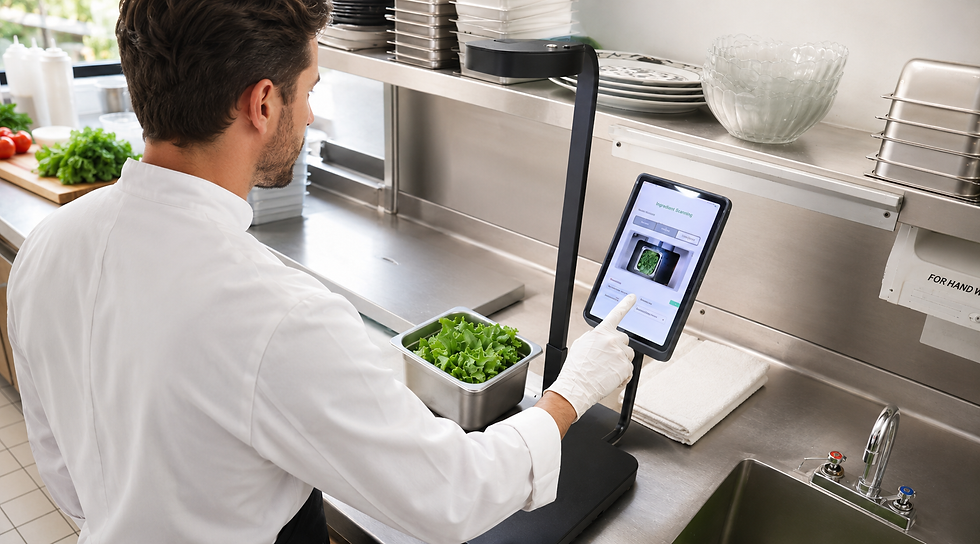
To bridge the gap between back of house production and actual student consumption, forward-thinking universities are integrating automated kitchen intelligence platforms.
Metafoodx provides high-volume collegiate dining programs with the real-time data visibility required to eliminate structural overproduction.
Live Consumption Monitoring: Metafoodx tracks the exact velocity of food moving off the buffet lines during active meal periods. If a specific pasta dish or protein station slows down, the culinary team receives instant visibility to downscale the next batch.
Dynamic Demand Forecasting: By analyzing historical consumption patterns alongside campus variables like weather, day of the week, and academic calendar shifts, the platform helps chefs build optimized daily par sheets.
Verifiable Sustainability Reporting: Metafoodx compiles precise, auditable data on pre-consumer food reduction. This gives sustainability officers clear metrics to showcase progress toward institutional climate goals and green campus certifications.
Frequently Asked Questions
Why do college dining halls generate so much food waste?
College dining halls generate high waste volumes primarily due to all-you-care-to-eat operational models. Because students pay a flat entry fee, there is zero financial disincentive for over-portioning. Additionally, kitchens must overproduce to keep buffet stations fully stocked for late-arriving students.
What is the difference between food waste diversion and food waste reduction?
Food waste diversion focuses on managing food after it is discarded, such as composting or anaerobic digestion. Food waste reduction focuses on source prevention. It uses data to ensure kitchens only cook what will be consumed, saving ingredient costs, kitchen labor, and production utilities.
How can a university accurately track kitchen overproduction?
Universities can track overproduction by deploying automated kitchen intelligence platforms like Metafoodx. These systems continuously cross-reference production volumes with real-time consumption rates at the counter, allowing culinary teams to spot overproduction trends mid-service.
Data as the Foundation for Green Campus Dining

Meeting university sustainability goals requires moving past baseline recycling and back-end composting. To achieve a zero-waste campus, auxiliary leaders must address the systemic overproduction built into traditional meal plans.
By implementing Metafoodx, college dining programs replace historical guesswork with active kitchen intelligence. This shift enables universities to drastically cut raw food costs, maximize back of house labor efficiency, and deliver the verifiable environmental progress that modern students demand.
Metafoodx is an AI-powered food intelligence platform that helps foodservice operations reduce waste, cut costs, and improve kitchen efficiency. Ready to see how we can help transform your food service operation? Book a demo with our team today.


Comments