
Fix the Whole System or Fix Nothing: A Better Way to Run Sustainable Food Operations
Updated: Oct 21

Why Watching the Trash Can Won’t Solve Your Food Waste Problem
Tracking what goes in the trash is a good first step, but it won't fix food waste on its own. Waste comes from earlier decisions: what you order, how you batch food, how much you serve and how guests respond. If you only measure the trash, you see the result but not the cause.
The right tool also helps you understand why food was wasted. With connected data from purchasing through the plate, teams can stop guessing and fix problems before they happen.
See the Whole Operation
Preventing food waste means stopping it before it's created, not just deciding where it goes. For that, you need to see the whole operation, so you can find problems, forecast demand and change how you work.
1. Production Planning: Make What Guests Will Eat
Batch cooking based on rough guest counts or the day of the week often leads to overproduction, which is a major cause of food waste. Kitchens often don't know what guests actually eat.

In one school cafeteria, the data showed a clear mismatch. Grilled Chicken Breast was among the most expensive items prepared and topped the list of leftovers. Grilled Salmon was eaten more, with very little waste, which suggests guests preferred it when both were served. Making less chicken on salmon days would bring production closer to demand. Egg Whites and Harvest Vegetable Scramble also had high waste and low consumption, so they're candidates for smaller batches or menu rotation. Fresh Pasta and Caesar Salad were well balanced and earned their place on future menus. |
Use past consumption by menu item and ingredient, then factor in weather, local events and school schedules. Your forecasts will get closer, and chefs can cook fresh, smaller batches nearer to service.
Better planning also helps with purchasing. When you know what you'll need, you can avoid over-ordering ingredients that spoil before you use them. You'll also spend less on food, use less energy for holding equipment and use staff time better during busy periods.
2. Workflow: Track Where Waste Happens
Food waste builds up across the whole process, so track it at each stage:
Prepared amounts, leftovers and consumption. Record how much you prepare, serve and have left over, then adjust production and timing. If you know two of these numbers, you can work out the third.
Batch timing. Many kitchens cook large batches hours before the rush. Food then goes to waste or sits too long under warmers. Current consumption data lets you stagger cooking across the meal.
Plate waste. What guests leave behind tells you about portions, menu appeal and food quality. In a 2025 ReFED and Datassential survey, 25% of consumers said they leave restaurant food uneaten always or most of the time. Patterns help you adjust menus, portions and preparation.
Menu performance. Some dishes keep producing more waste because they're unpopular or poorly executed. Without tracking by item, you'll keep repeating the same mistakes.
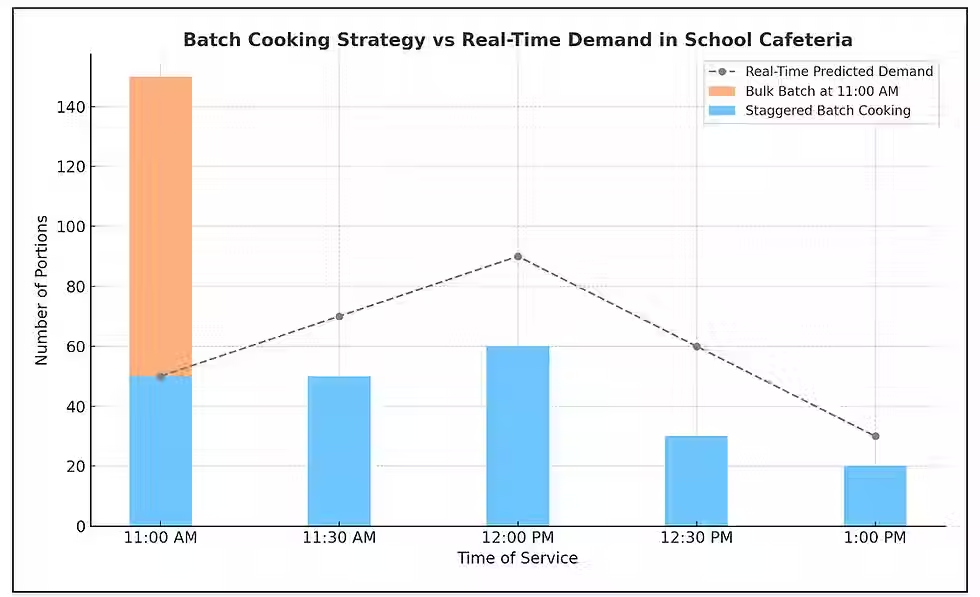
In this all-you-care-to-eat kitchen, all 150 portions of a hot entrée were cooked at 11:00 AM, hours before the lunch rush. That led to overproduction, food quality problems under heat lamps and waste as demand changed. As the chart shows, staggered batches track much more closely with what guests actually eat. |
3. Quality and Compliance: Keep Food Safe to Serve
US foodservice generated 12.5 million tons of surplus food in 2024, according to ReFED. Some of that waste can be prevented, because food stored at the wrong temperature or held too long may have to be thrown away.

In this chart, 68.3% of service pan scans were between 45°F and 135°F. That's inside the FDA Food Code's temperature danger zone of 41°F–135°F, where hot food shouldn't be held. Hot food should stay at 135°F or above, because bacteria can grow faster at lower temperatures and food may have to be thrown out. Tracking temperature by item and time of day lets teams change prep timing or equipment settings, reducing risk and preventing waste. |
Metafoodx helps by tracking storage conditions, prep times and batch schedules.
Why Measuring Waste Isn't Enough
Some vendors focus on monitoring waste bins. That approach has limits:
Accuracy. Computer vision can struggle with different bins and with how food gets thrown out. Mixed waste can also confuse both AI and people.
No root cause. Measuring waste doesn't show the purchasing, production planning or guest behavior behind it.
Missing food. Donated or repurposed food may not be counted, so the picture is incomplete.
Metafoodx focuses on prevention. It fits into your existing workflow without adding extra work, so teams can use current data during prep, production and service.
How to Get Started with Metafoodx
Connect your food management software. Bring menu planning, inventory, prep and sales data together in one view.
Use AI production forecasting. Metafoodx looks at guest counts, weather, local events and past consumption to predict demand by menu item and ingredient, so you can cook the right amount at the right time.
Food Waste Is a Signal
Waste points to problems at every stage, from purchasing through service. You can't solve it just by tracking what's thrown away. You have to act earlier, with current data from across the operation.
If you want to fix food waste, you have to fix the whole system. Anything less is just cleanup.
Related reading: Food Waste Prevention vs. Food Waste Tracking · What Is a Food Waste Tracking System? · US Food Waste Laws by State
Metafoodx is a food operations intelligence platform that captures the food journey from prep to plate, so foodservice teams can lower food cost, produce more accurately, and prevent waste before it happens. Ready to see how we can help transform your food service operation? Book a demo with our team today.


