
Commercial Kitchen Food Tracking That Works

Updated: Jul 14

For high-volume operations, that timing matters. Universities, hotels, corporate dining programs, cruise kitchens, and fast-casual groups do not need more spreadsheets or another manual log that gets filled out at the end of service. They need precise visibility across the full lifecycle of food - from production to service, leftovers, reuse, donation, and waste. When tracking happens in real time and at the item level, operators can replace guesswork with control.
What commercial kitchen food tracking should actually track
A lot of kitchen teams say they are tracking food when they are really only recording waste. That is a start, but it leaves a major blind spot. If you only see what was discarded, you miss the operational story that created it.
Effective commercial kitchen food tracking captures what was produced, what was served, what remained, and what happened next. That includes net weight, menu item identification, temperature, and final disposition. Those details matter because overproduction is not the same problem as poor portion control, and reusable leftovers are not the same as true waste.
This is where many systems fall short. Manual processes often rely on staff to remember what item was discarded, estimate the amount, and log it correctly during a rush. Even with good intentions, that data tends to be inconsistent. It also arrives too late to support same-day decisions.
Automated tracking changes the value of the data. Instead of asking teams to stop and document everything by hand, the right system captures information as part of the kitchen workflow. That makes the data more complete, more reliable, and far more useful.

Why commercial kitchen food tracking matters beyond waste
Waste reduction is usually the first reason operators start looking at tracking technology, but it should not be the last. The bigger opportunity is operational visibility.
When you can see food movement from prep through post-service, forecasting gets sharper. Purchasing becomes more aligned with actual consumption. Menu planning gets grounded in evidence instead of assumptions. Chefs can identify where production standards are drifting. Multi-unit leaders can compare sites on the same terms instead of relying on inconsistent reporting.
That is especially important in environments with variable demand. A college dining hall on game day, a resort during conference season, or a corporate cafe on hybrid work schedules can all experience significant swings in volume. Historical sales data helps, but it does not fully explain what was produced, what was consumed, and what was left behind. Food tracking closes that gap.
There is also a compliance and safety benefit. Temperature and disposition data provide a clearer record of how food was handled. For operations that reuse, donate, or repurpose food, that level of documentation supports better decisions and stronger accountability.
Sustainability teams benefit too, but only when the data is specific enough to act on. Broad estimates may support a report. Item-level tracking supports change.
The problem with manual logs and end-of-day reporting
Most large kitchens already know where the friction is. Staff are moving fast. Managers are covering multiple priorities. Logging food events by hand feels like one more administrative task in a labor environment that is already stretched.
The result is usually partial data. A pan gets scraped, but no one records it. A leftover gets saved, but the quantity is estimated. A station logs “mixed vegetables” while another logs “veg mix,” making comparisons unreliable across sites. By the time leadership reviews the numbers, the shift is over and the opportunity to intervene has passed.
That does not mean every manual process is useless. In smaller or lower-volume settings, a basic logging system may still surface obvious issues. But in complex commercial kitchens, manual tracking rarely scales well. The more locations, menu variation, and production volume you manage, the more expensive incomplete data becomes.
Operators do not need more work. They need better capture.
What to look for in a food tracking system
The right platform should fit the pace of the kitchen. If it slows service or depends on perfect staff compliance, adoption will be uneven. In practice, the most effective systems are the ones that gather accurate data in seconds and make it immediately usable.
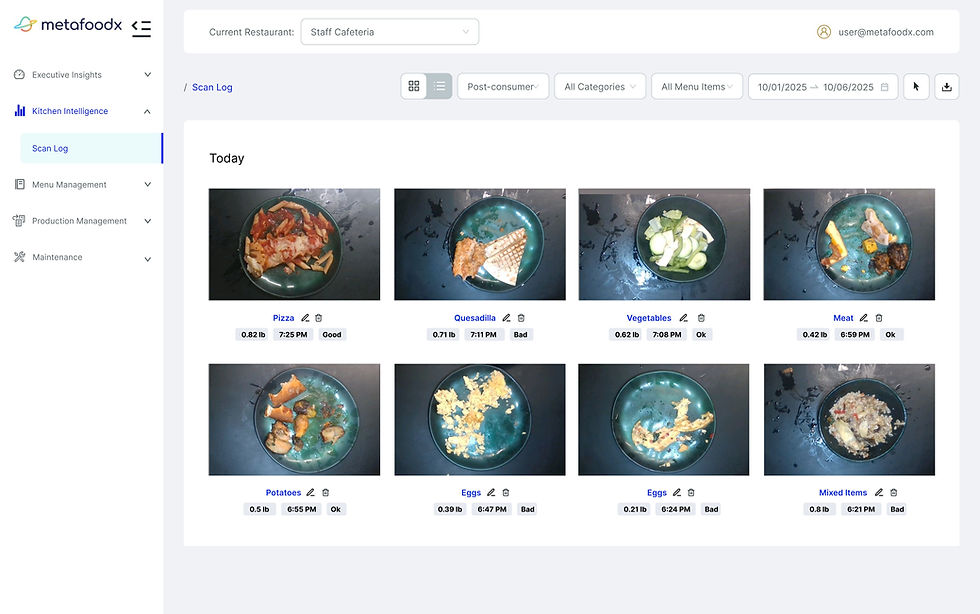
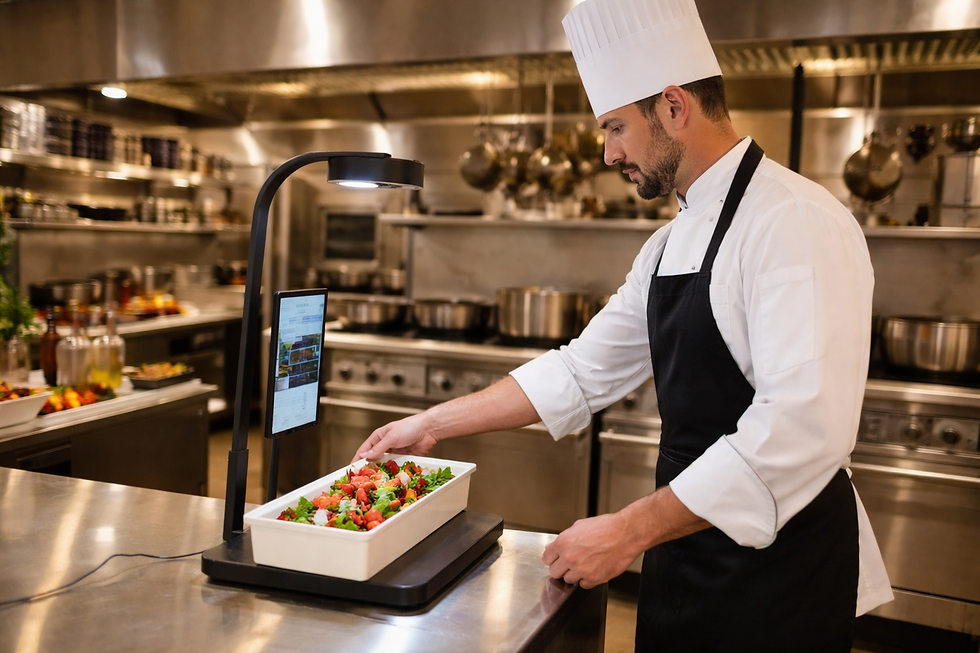
That starts with automation. AI-powered scanning can identify menu items, capture net weight, record temperature, and categorize disposition without forcing staff into a long manual workflow. In a high-volume environment, that difference is not minor. It is what determines whether tracking becomes part of the operation or gets skipped when the line gets busy.
It also helps to think beyond the moment of capture. Good commercial kitchen food tracking should feed dashboards and reporting tools that show trends by item, meal period, station, location, and disposition type. If the system only stores raw records without turning them into operational insight, managers still have to do the heavy lifting.
Integration matters as well. A platform works better when it can align with existing kitchen management systems, reporting structures, and enterprise processes. That reduces duplicate work and helps teams move from isolated data points to a connected view of production and performance.
There is a trade-off to consider here. Some teams want a lightweight solution that can be deployed quickly with minimal change management. Others need a more comprehensive system that supports enterprise reporting, sustainability metrics, and multi-site standardization. The best choice depends on operational complexity, but in either case, the goal is the same - accurate visibility without added labor.
From data capture to better decisions
Tracking by itself is not the finish line. The real value comes from what happens next.
When operators can see that a specific entree is consistently overproduced on Thursdays, they can adjust prep volumes. When a side dish is frequently left over but remains within safe temperature parameters, they can build a clearer reuse plan. When one location shows higher discard rates for the same menu item, leaders can investigate portioning, merchandising, or forecasting practices.
There is also a guest experience angle. Running out of a high-demand item hurts satisfaction, but so does producing too much of the wrong item and compromising freshness later in service. Better tracking helps teams thread that needle. They can produce with more confidence because they know what demand actually looked like, not what they assumed it would be.
This is where a full-lifecycle approach stands out. Tracking only what gets thrown away tells you where loss occurred. Tracking production, service, leftovers, donation, reuse, and composting shows how the operation behaves. That broader view gives leaders more levers to pull.
Why full-lifecycle tracking changes the conversation
In many organizations, food waste reporting lives in one conversation, purchasing in another, and forecasting somewhere else entirely. That separation creates delays and missed opportunities.
Full-lifecycle tracking brings those conversations together. It connects what was ordered, what was prepared, what was consumed, and what was left. That makes it easier to spot systemic issues instead of treating every waste event as an isolated problem.
For example, if one dining program sees repeated excess in prepared proteins, the issue may not be poor execution on the line. It may be forecasting assumptions, batch cooking patterns, or menu mix. If bakery items are regularly donated, that may reflect a planned recovery strategy rather than operational failure. Without disposition-level tracking, those distinctions get blurred.
That clarity matters to executive stakeholders. Finance wants measurable margin improvement. Sustainability leaders want credible diversion metrics. Culinary teams want practical feedback they can use without being buried in admin work. A strong tracking system serves all three when the data is accurate and the workflow is simple.
Solutions built for this level of visibility, including platforms like Metafoodx, are changing expectations in commercial kitchens. The standard is no longer just recording waste. It is understanding food movement from production to plate and using that intelligence to improve every shift.
The kitchens that benefit most
Food tracking is no longer just about documenting waste after the fact. It is about understanding what is happening throughout production so kitchens can make better decisions before food is lost.
Technology will never replace experienced chefs or strong operational discipline. What it can do is give teams accurate, real-time information that removes guesswork from everyday decisions.
As labor costs rise and margins remain tight, the kitchens that perform best will be the ones that turn data into action. The goal is not to collect more information. It is to consistently produce the right food, in the right quantity, at the right time.
Metafoodx is an AI-powered food intelligence platform that helps foodservice operations reduce waste, cut costs, and improve kitchen efficiency. Ready to see how we can help transform your food service operation? Book a demo with our team today.


Comments