
What Is Food Operations Intelligence? A Guide for Commercial Kitchens
Updated: 1 day ago
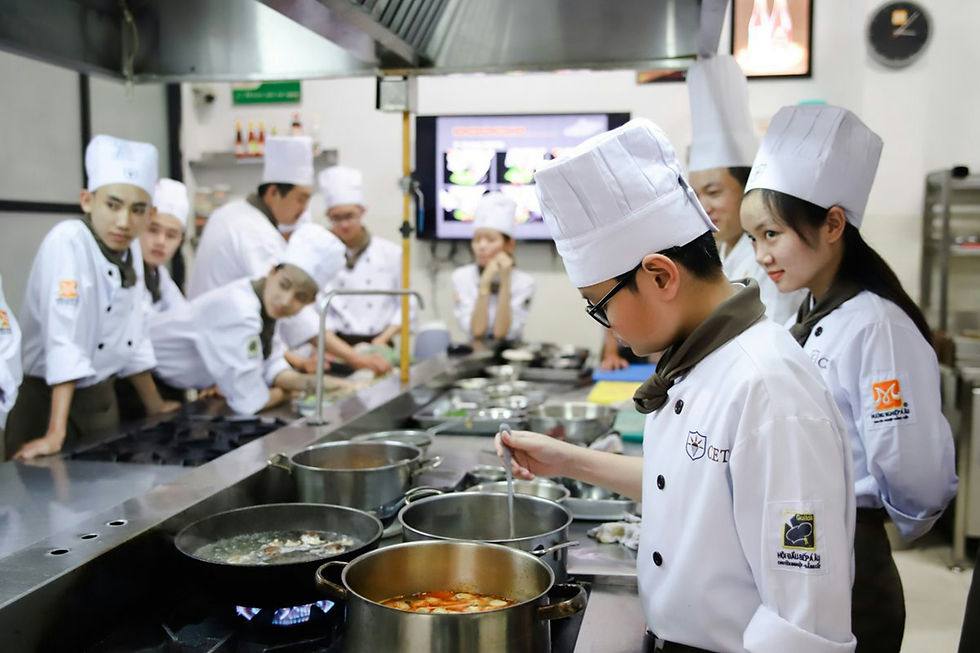
Food operations intelligence is the use of measured food data, from prep and production through consumption, leftovers, and plate returns, to make better operating decisions in a commercial kitchen. Its goal is simple: produce the right food, at the right time, in the right quantity, at the right quality and cost.
A food operations intelligence platform captures what actually happens to food at each stage of service and turns it into decisions about what to produce, when to replenish, when to stop, and what to change in purchasing, prep, portions, and recipes. It is different from a sales report, which shows what was sold, and from food waste tracking, which shows what was thrown away. It connects the whole food journey so the cause of a cost problem can be found and fixed, usually before the next comparable service and sometimes during service itself.
A food operations intelligence platform is the system that does this work. A point-of-sale system tracks what was sold, and inventory software tracks what was bought. A food operations intelligence platform tracks what actually happens to the food in between: what was produced, what guests ate, what was left over, and what came back on plates. It works alongside the kitchen management systems teams already use, such as Jamix, Parsley, and NetMenu by Illumia, so measured results flow back into menus, recipes, and ordering.
Why Commercial Kitchens Need It Now
Foodservice has a visibility problem. Every day, culinary and operations teams decide what to purchase, prepare, produce, replenish, serve, and stop producing, and too many of those decisions still rely on experience, habit, and forecasts that are disconnected from what guests actually eat. The cost of getting those decisions wrong has gone up. The National Restaurant Association reports that wholesale food prices remain about 33 percent above pre-pandemic levels.
ReFED reports that U.S. foodservice generated 12.5 million tons of surplus food in 2024, worth $157 billion, and its research with university dining programs names overproduction as the main driver in back-of-house kitchens. Overproduction happens when a kitchen has to make production calls without clear information about what guests actually eat.
Commercial kitchen operations technology has improved ordering, point of sale, and inventory, but the physical food itself, how much was made and how much was eaten, has largely gone unmeasured.
How It Differs From Food Waste Tracking
Many operators already measure waste, and that discipline matters. But waste data starts at the bin. It explains the outcome, not the decision that caused it, and once the easy wins are captured, waste tracking alone tends to plateau. Food waste measurement was the first step. Food operations intelligence is the next.
Food waste tracking | Food operations intelligence | |
Starting point | What ends up in the bin | The full food journey: production, consumption, prep loss, and plate returns |
Core question | How much did we waste, and why? | What should we produce, when should we replenish, and when should we stop? |
Timing | After the shift or the day | Before the next service, and during service where teams can adjust batches |
Main users | Sustainability or waste champion | Culinary, operations, procurement, and finance leaders |
Main outcome | Waste reduction | Lower food cost, production accuracy, quality, and consistency, with waste reduction as a result |
Put simply: waste is the output, and consumption is the signal. Systems built only around discarded food, and sustainability platforms built only around reporting, see the first. Food operations intelligence uses both. For what a tracking system should measure and how to turn it into decisions, see food waste tracking software for commercial kitchens.
The Decisions It Changes
The value of food operations intelligence shows up in specific decisions, not in dashboards.
Should the line get another full pan, a half pan, or nothing at all?
Should the backup batch go out now, or wait fifteen minutes?
Is demand for an entrée falling, so production should stop early?
Is an expensive ingredient being lost at the prep table because of trim technique, storage, or supplier quality?
Is food coming back on plates because a portion is too large or a recipe is not landing with guests?
Each of those questions has a different answer and a different owner, and each needs measured data to answer well. When the data is connected, the kitchen can tell which problem it actually has before it acts. A high leftover number does not automatically mean "produce less"; it might mean a smaller first batch, later replenishment, a portion change, or no change at all if the day was unusual.
What the data shows | Where to look | What to try |
High prep loss, normal consumption | Yield, storage, product quality, purchasing | Review trim standards, storage, supplier specs, and order quantities |
Low prep loss, high leftovers at the station | Forecasting, batch size, production planning | Reduce first batch, hold backup pans, stop late-service production earlier |
Low station leftovers, high plate returns | Portion size, recipe acceptance, serving practice | Review portions, serving utensils, recipe execution, and guest feedback |
High consumption, frequent run-outs | Underproduction or slow replenishment | Increase planned quantity or speed up refills for comparable services |
How Metafoodx Delivers Food Operations Intelligence
Metafoodx is a food operations intelligence platform built for high-volume commercial kitchens in higher education, corporate dining, hospitality, and restaurants. It captures food data in three modes.
Consumption Tracking scans each pan as it goes to the line and again at the end of service, capturing weight and temperature and matching it to the menu item, so the team sees what was produced, consumed, and left over by item, station, and service period.
Back-of-House Waste records prep loss, trim, and spoilage with a reason, and compares it with expected yield.
Post-Consumer Plate Waste captures what returns on plates in about two seconds per scan, with optional guest feedback.
The Metafoodx Mobile App puts production activity, the scan log, and reports on a phone, so chefs can check how items are moving from the kitchen floor. Production Management, forecasting, Freshness Alerts, Overproduction Alerts, and a weekly report ranking the top five high-cost overproduction items turn that data into the next plan. Integrations with menu and kitchen management systems let planned items flow in and measured results flow back.
Results From Kitchens Using Metafoodx
Through September 2026, Metafoodx has measured 5.4 million pounds of food consumption and 528,000 pounds of overproduction across more than 60 dining locations. Pomona College cut overproduction by 54% across its dining halls and lowered plate costs by 8% over nine months. At UMass Amherst, Harvest Market cut overproduction by 51.7% in 12 weeks. Across deployments, customers report returns of 5 to 11 times their investment and food cost reductions of about 2 to 8%. For the full results, read AI for Commercial Kitchens: How Metafoodx Works.
Measure, Understand, Act, Predict, Prevent
Food operations intelligence works as a loop. Measure what happened. Understand why. Act on specific items. Predict what the next comparable service will need. Prevent unnecessary production before it happens.
We cover each step in more depth in the food operations intelligence loop, and the stops the data comes from in the food journey from prep to plate. For the decision that matters most during service, see full pan, half pan, or stop.
Each part of the organization uses the same data differently: CFOs see food cost tied to production and consumption, culinary teams know what to produce and when to stop, operations leaders compare like-for-like locations, procurement connects purchasing to real yield and demand, and sustainability teams move from estimated reporting to measured prevention. Financial results depend on reliable food cost data, a measured baseline, and consistent use.
Procurement is a good example. Buying for usable cost instead of invoice price depends on yield and consumption data that only the kitchen can measure.
As Thierry Bourroux, VP of Customer Success at Metafoodx, puts it: "After more than 38 years in foodservice operations, I don't believe the industry's biggest problem is that we don't know food is being wasted. We know it is. The problem is that we have never had enough reliable information to consistently make the decisions that prevent that waste from happening in the first place."
For a closer look at how the Metafoodx AI Scanner works and the results customers are seeing, read AI for Commercial Kitchens: How Metafoodx Works.
What buyers mean by a foodservice intelligence platform
Buyers may use “foodservice intelligence platform,” “kitchen analytics” or “food operations intelligence” for overlapping needs. The label does not establish the product's scope. Ask which physical food events it measures and how those records support a production, quality or cost decision.
A menu system supplies planned dishes and recipes. POS supplies sales or meal-entry records. Inventory software records stock movements. Measured production, unserved returns, preparation losses and plate waste add different observations. Connecting them is useful, but an integration does not make a plan identical to actual output or a meal transaction identical to item-level demand.
There is also a boundary within consumption data. Food estimated taken from the serving line can include food later left on plates. Record plate waste separately before describing the result as food eaten. Track transfers and service losses so they do not silently inflate consumption.
A practical demonstration should follow one dish through the whole chain: planned quantity, actual outgoing batches, unserved return, destination, next recommendation and chef override. Ask who acts on the recommendation and what evidence will show whether the change worked. If the need is only a waste inventory, a narrower measurement tool may fit; if the need is production control, demonstrate the planning loop.
Use the ground-truth data guide for measurement boundaries and the selection guide for a structured evaluation.
Frequently Asked Questions
What is food operations intelligence?
Food operations intelligence is the use of measured food data across prep, production, consumption, leftovers, and plate returns to improve operating decisions in a commercial kitchen, with the goal of producing the right food at the right time, quantity, quality, and cost.
What is a food operations intelligence platform?
A food operations intelligence platform measures what a commercial kitchen produces, serves, leaves over, and gets back on plates, and turns that data into production plans, alerts, and reports that help teams produce the right food at the right time, quantity, quality, and cost.
How is food operations intelligence different from food waste tracking?
Food waste tracking measures what was thrown away. Food operations intelligence also measures what was produced and what was actually eaten, so teams can plan production and replenishment around what guests eat instead of only reviewing waste afterward.
Is food operations intelligence the same as kitchen management software?
No. Kitchen management software handles recipes, menus, ordering, and inventory records. A food operations intelligence platform measures the physical food itself and can share results back to kitchen management systems through integrations. See food operations intelligence vs. kitchen management software for a side-by-side comparison.
Which commercial kitchens benefit most?
High-volume operations with multiple stations or service periods benefit most, including university dining, corporate dining, hotels, and banquet and catering kitchens, where overproduction during service is often the largest controllable cost.
Metafoodx is a food operations intelligence platform that captures the food journey from prep to plate, so foodservice teams can lower food cost, produce more accurately, and prevent waste before it happens. Ready to see how we can help transform your food service operation? Book a demo with our team today.


